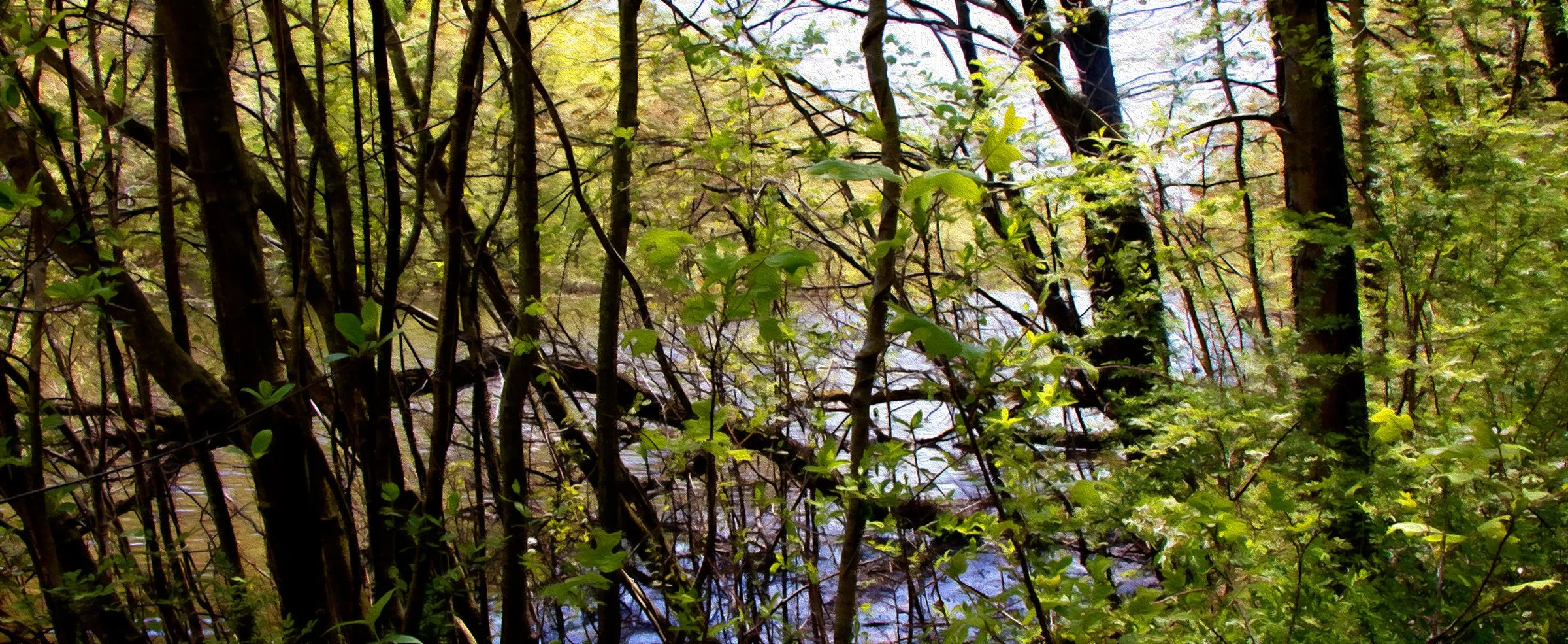

As you walk along the Raritan River, every step takes you across historic ground, some would say sacred ground, a landscape Indigenous people have walked for more than 10,000 years. For hundreds of generations before New Jersey existed, ordinary lives unfolded along this river and its tributaries, millennia before George Washington led his armies, 5,000 years before the Great Pyramids of Giza were built. This is a special place, an unlikely and little-known slice of human history and cultural memory, with a living past still present today beneath every step.
Paleoindians were here more than 10,000 years ago, and likely much earlier. Across the millennia, communities changed, moved, and adapted, and the names used to describe them changed as well. Only near the very end of this epic story did Europeans arrive and begin writing things down. Their records capture only a recent chapter in a much longer history and reflect European perspectives, biases, and misunderstandings rather than the voices of the Lenape people themselves.
RaritanLenape.org explores this story, from the Paleoindian peoples to the Lenape communities encountered by Europeans, through more than two centuries of displacement, and onward to the Lenape communities whose cultures and identities continue today.
Lenapehoking is not just a place from the past. It exists today. So let’s explore.
If a 17th-century Raritan Lenape person were telling this story, they would not begin with dates, fixed boundaries, or a debate over when their people first arrived. They would likely begin with stories passed down from mothers and grandmothers, maternal uncles, fathers and grandfathers, ancestors and relatives; stories of the river and the places where their people lived and traveled; and stories of the events that shaped their lives.
About the turtle: The Lenape traditionally recognize three principal clans: Turtle, Wolf, and Turkey. Because the Turtle Clan is most often associated with the Raritan River region, the turtle was chosen as a symbol of the Lenape families and communities connected to this place, not to suggest that all Raritan Lenape were Turtle Clan (they likely were not).
*Lenape society was traditionally matrilineal, with family and clan identity traced through the mother’s line. Mothers, grandmothers, and maternal uncles held particularly important roles within family and clan life.