RaritanLenape.org > Raritan Lenape History / Footprint > Visit Lenape Places
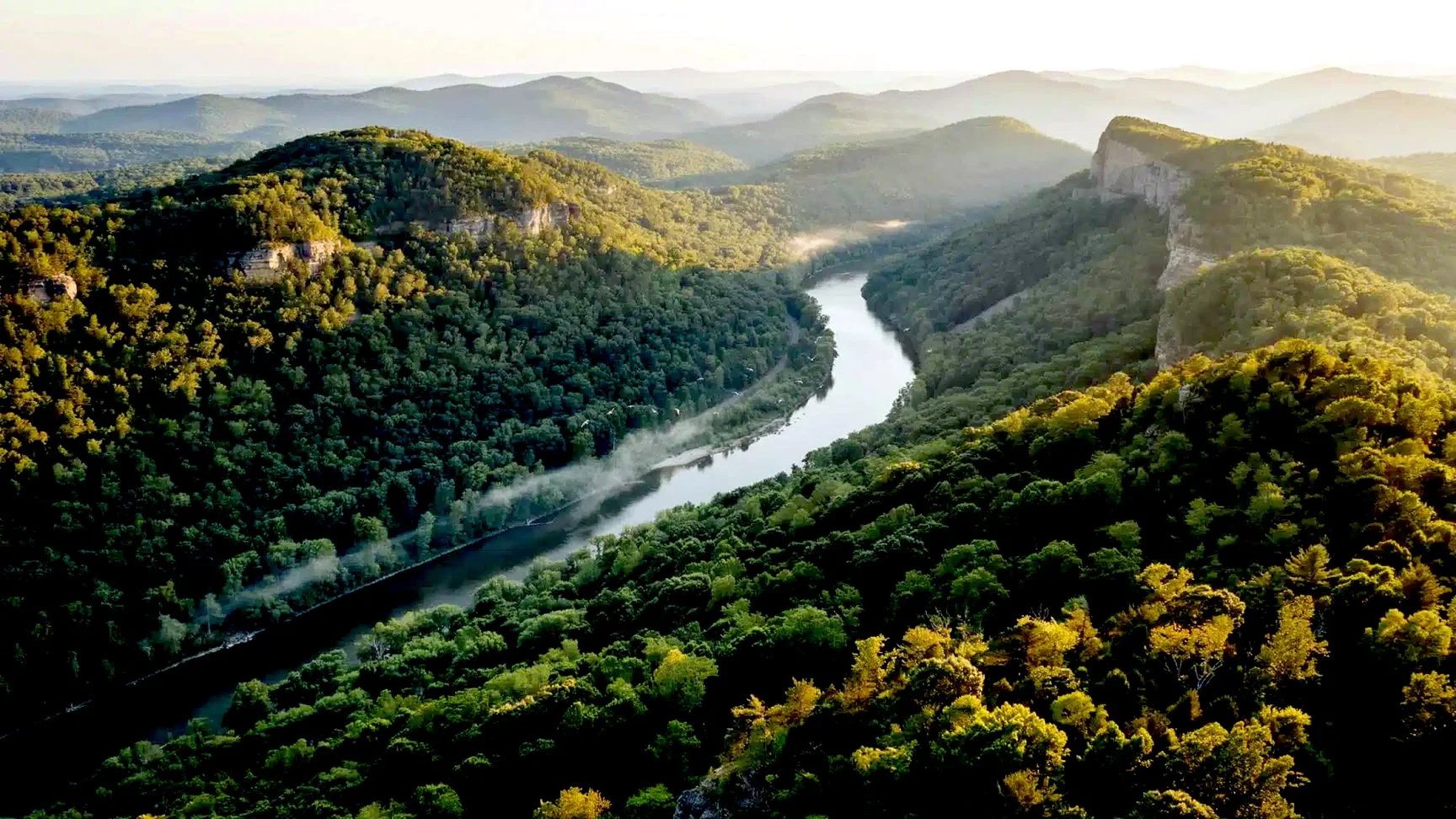
Delaware Water Gap. PA/NJ
Historic Lenape Landscapes
Walk the land and waterways that shaped Lenape life.
Raritan River and Duke Island Park: Walk along one of the most important waterways in the ancestral homeland of the Raritan Lenape. For thousands of years, Indigenous families traveled the river, fished its waters, and established settlements and seasonal camps along its fertile banks. Today, Duke Island Park in Bridgewater offers scenic walking trails and river views, providing visitors with an opportunity to experience a landscape that shaped generations of Lenape life.
Delaware Water Gap: Where the Delaware River cuts through the towering Kittatinny Mountains, one of Lenapehoking's most dramatic landscapes reveals thousands of years of Indigenous history. Lenape ancestors traveled this river corridor, fished its waters, and established communities throughout the surrounding Minisink region. Today, the Delaware Water Gap National Recreation Area preserves a remarkable stretch of this ancestral homeland. The area's continuing cultural significance is reflected in the documentary Return to Lenapehoking, which follows Lenape youth reconnecting with their ancestral homeland, including the Delaware Water Gap. Visitors can explore the river, forests, and mountain trails while experiencing a landscape that remains deeply meaningful to Lenape people today.
Washington Valley Park and Middle Brook: Explore the wooded ridges, rocky streams, and scenic valleys of the Watchung Mountains, a landscape familiar to generations of Lenape people long before European settlement. The Middle Brook and its tributaries connected the surrounding hills to the Raritan River, providing access to water, wildlife, and natural travel corridors. The area also holds an important place in colonial history through the 1681 land agreement involving the Lenape leaders Konackama and Queromak, which concerned lands in the Bound Brook and Middle Brook region. This early transaction marked part of the transfer of ancestral Lenape lands into European ownership. Today, Washington Valley Park in Bridgewater preserves portions of this historic landscape, with hiking trails winding through forests, wetlands, and rugged terrain. Visitors can experience the natural features that once supported Indigenous hunting, gathering, and travel throughout the Raritan Valley.
Minisink Historic District: Along the Upper Delaware River, near the borders of New Jersey, Pennsylvania, and New York, lies one of the most important historic centers of Munsee Lenape life. For centuries, the Minisink region supported Indigenous villages, agricultural fields, fishing grounds, and gathering places for trade and diplomacy. The Minisink Trail, part of an extensive network of Indigenous pathways, connected the Upper Delaware Valley with communities farther east, including routes toward the Raritan region. Minisink was also associated with influential Lenape leaders and the tradition of the Minisink Council Fire, where leaders gathered to deliberate, conduct diplomacy, and address matters affecting their communities. Although the precise location of this historic council fire has not been conclusively established, it remains an important part of Minisink's leadership history. Today, visitors can explore the Delaware River corridor and surrounding historic landscapes, experiencing a place that was once a vital center of Lenape community life, leadership, and travel.
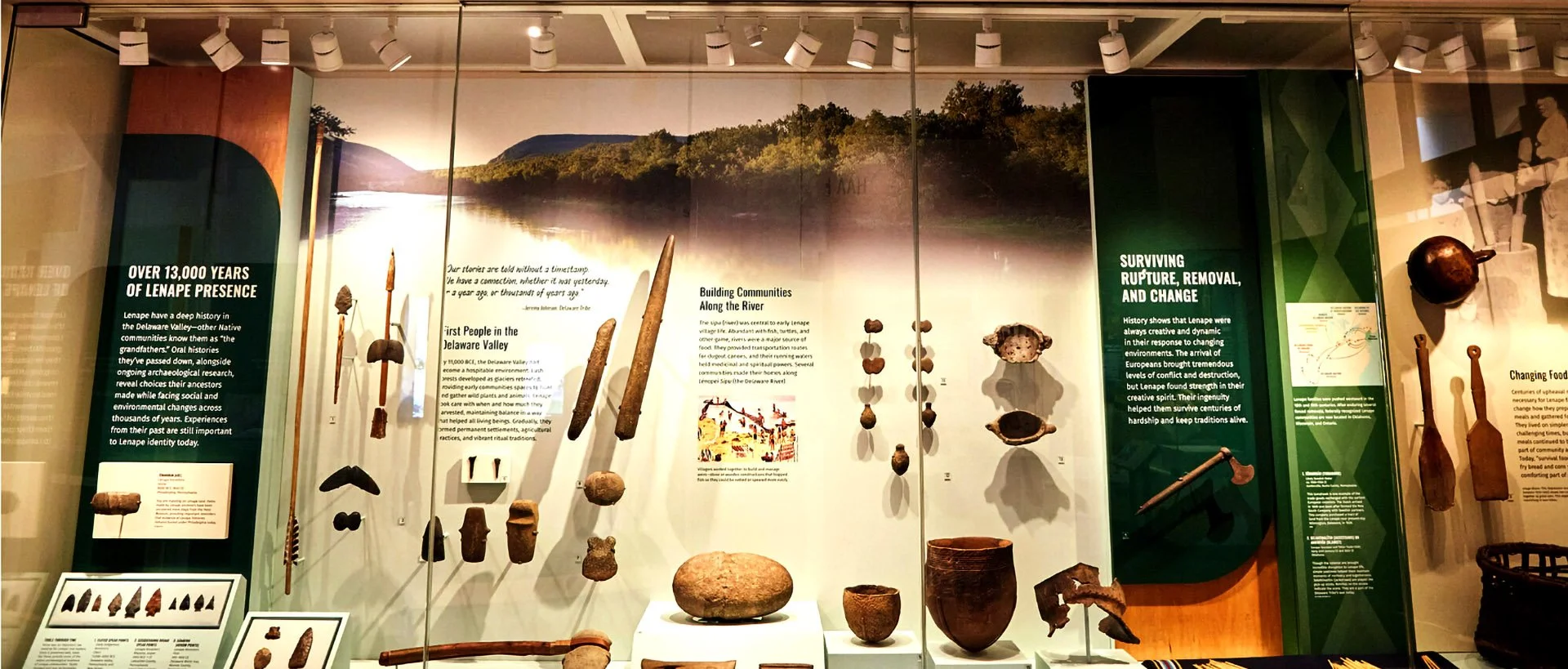
Penn Museum
Museums and Lenape Collections
See objects, documents, and archaeological evidence that preserve Lenape history.
New Jersey State Museum, Trenton: Home to one of the region's most important collections of Lenape archaeological and cultural objects, the New Jersey State Museum offers visitors a remarkable journey through thousands of years of Indigenous history. Its exhibitions feature stone tools, pottery, a rare dugout canoe, wampum, fishing equipment, clothing, baskets, and personal belongings that reveal the ingenuity and traditions of Lenape ancestors. Three major exhibitions, New Jersey's Original People, Cultures in Competition, and A Much Moved People, explore Indigenous life before European contact, the transformations brought by colonization, and the displacement and cultural survival of the Lenape. Particularly moving are objects collected from Lenape communities in Oklahoma and Canada, demonstrating how traditions endured long after their ancestors were forced from their eastern homeland. For anyone interested in Lenape history, this is one of New Jersey's most rewarding museum destinations.
Rutgers University Geology Museum, New Brunswick: Founded in 1872, this historic museum explores New Jersey's ancient natural history through fossils, minerals, geological specimens, and exhibits on prehistoric life. Highlights include a mastodon skeleton and displays illustrating the landscapes and wildlife that existed during the earliest periods of human habitation in the region. Although not primarily a Lenape museum, it offers valuable context for understanding the ancient environment in which Indigenous ancestors lived and adapted over thousands of years.
Penn Museum, Philadelphia: Located in the heart of Lenapehoking, the University of Pennsylvania Museum of Archaeology and Anthropology offers an important connection to the history and living culture of the Lenape people. Its new Native North America Gallery, opened in November 2025, features a dedicated Delaware/Lenape section displaying historical and contemporary objects that illustrate centuries of cultural continuity, adaptation, and resilience. The exhibition was developed with Indigenous cultural leaders, including Jeremy Johnson, Cultural Education Director of the Delaware Tribe of Indians in Oklahoma, who served as a consulting curator. His participation helped bring contemporary Lenape knowledge, perspectives, and traditions into the museum's interpretation of its collections. Through collaboration with Native representatives and ongoing consultation concerning cultural objects and repatriation, the Penn Museum is working to strengthen relationships with Indigenous nations and ensure their histories are told with their own voices. Visitors can explore Lenape cultural objects while discovering how the Lenape continue to maintain their identity and connections to their ancestral homeland.
Museum of Indian Culture, Allentown, Pennsylvania: Museum of Indian Culture, Allentown, Pennsylvania: Situated within the ancestral homeland of the Lenape, this intimate museum offers visitors a fascinating exploration of Indigenous history, culture, and traditions. Its exhibitions feature Lenape stone tools, pottery, trade goods, and archaeological discoveries, including objects recovered from ancient Pennsylvania rock shelters. The exhibit Walking in the Ancestors' Footsteps: The Lenape Past and Present traces Lenape history from early settlement through colonial encounters, forced displacement, and the survival of today's Lenape nations. In 2020, the museum established a formal partnership with the Delaware Nation of Oklahoma, including an extension of the Nation's Historic Preservation Office, strengthening its connection to living Lenape communities. Visitors can also enjoy guided tours, cultural demonstrations, and the nearby Lenape Trail along the historic Oley Path. A reconstructed Lenape village, featuring traditional dwellings and educational activities, is planned for the surrounding park.
Great Swamp Environmental Education Center, Basking Ridge: Located along the Great Swamp in Lord Stirling Park, the Somerset County Environmental Education Center offers a fascinating journey through New Jersey's prehistoric and Indigenous past. Its permanent exhibition, The Great Swamp Experience, features archaeological artifacts spanning thousands of years of human occupation, from the Paleoindian period through the era of the Lenape. Exhibits also explore the region's Ice Age history, including mastodon bones and the retreat of the Wisconsin Glacier, revealing a landscape once inhabited by enormous prehistoric animals. Stone tools, projectile points, and other Indigenous objects illustrate how generations of people hunted, gathered resources, and adapted to the changing environment. Visitors can also explore miles of woodland trails and boardwalks through the wetlands, experiencing a landscape that connects New Jersey's ancient natural history with its Indigenous heritage.
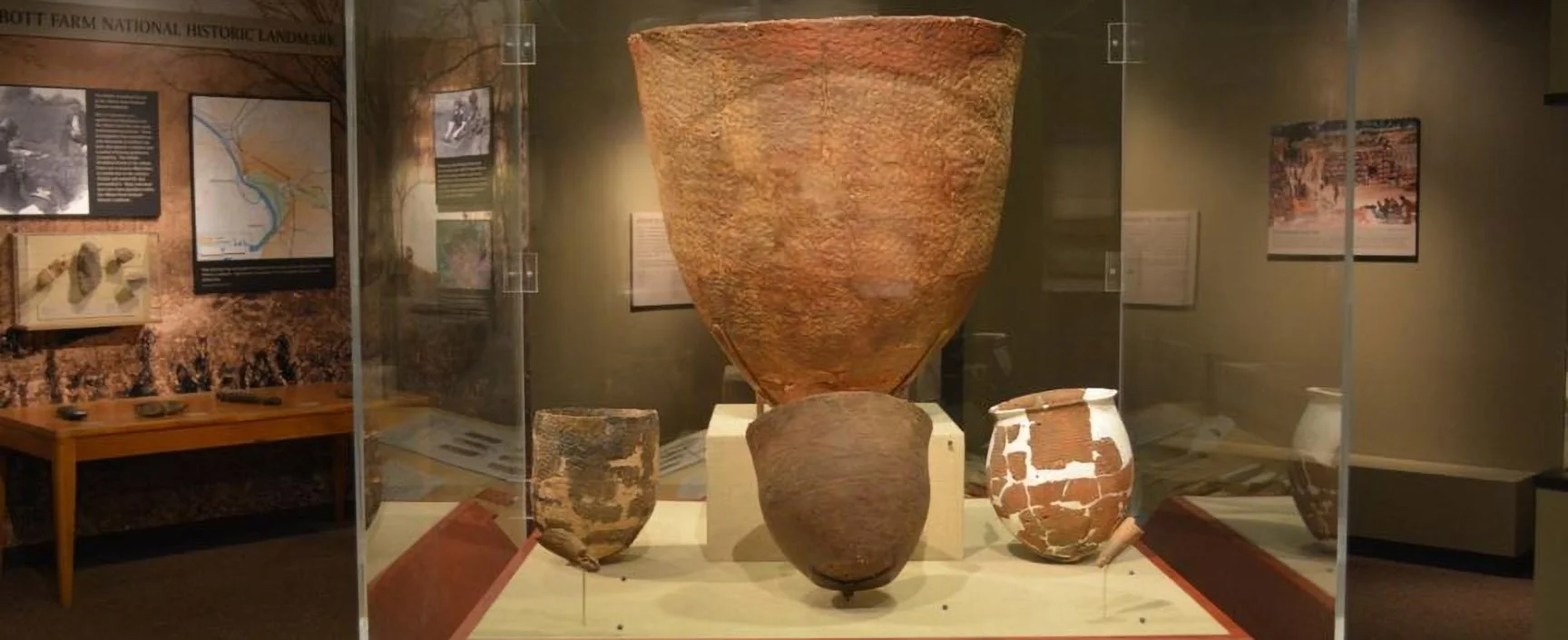
Abbot Farm
Lenape Villages and Historic Sites
Discover places where Lenape communities lived and where important chapters of their history unfolded.
Winakung Lenape Village at Waterloo Village, Stanhope: Experience a reconstructed Lenape woodland village developed through the archaeological research of Herbert C. Kraft and his son, John T. Kraft, two leading authorities on New Jersey's Indigenous history. Designed and built by John Kraft in 1988–1989, Winakung recreates traditional Lenape dwellings, gardens, and community spaces based on archaeological discoveries and historical research. The village offers a fascinating glimpse into daily life in Lenapehoking before European settlement, illustrating how Lenape families built their homes, prepared food, and lived in harmony with their environment. Public access may be limited, so visitors should confirm availability before visiting.
Abbott Farm National Historic Landmark, Hamilton Township: One of the most significant Indigenous archaeological landscapes in the eastern United States, Abbott Farm preserves evidence of approximately 13,000 years of Native American history along the Delaware River. Ancient settlements, stone tools, pottery, and burial grounds reveal generations of Indigenous life, including one of the region's largest known Middle Woodland settlements. Named for pioneering archaeologist Charles Conrad Abbott, whose nineteenth-century discoveries helped transform the study of America's earliest inhabitants, the site became a National Historic Landmark in 1976. Abbott Farm is also a sacred ancestral burial landscape, where Indigenous graves and funerary objects have been uncovered. Today, Lenape nations continue efforts to protect ancestral remains and ensure their respectful treatment and repatriation. Visitors can explore the surrounding Abbott Marshlands, walk trails through wetlands and wooded bluffs, and visit the Tulpehaking Nature Center, where exhibits interpret the area's remarkable natural and Indigenous history. More than an archaeological landmark, Abbott Farm is a place of enduring cultural significance, deserving both appreciation and respect.
The Discovery Center at Point Breeze, Bordentown: Overlooking the Delaware River and Crosswicks Creek, this historic 60-acre property preserves a landscape inhabited by Indigenous peoples for thousands of years. Opened in 2023 by the D&R Greenway Land Trust, the Discovery Center features exhibits exploring Lenape history, language, cultural traditions, and connections to the natural world. Visitors can see Indigenous artifacts, traditional artwork, and a Three Sisters Garden featuring corn, beans, and squash. Educational displays and video presentations introduce Lenape history and contemporary cultural perspectives. The property also preserves the former gardener's house of Joseph Bonaparte, Napoleon's older brother and the exiled King of Spain, who established his estate here in the early nineteenth century. Combining Indigenous history, colonial-era landscapes, and natural beauty, Point Breeze offers visitors an opportunity to explore several remarkable chapters of New Jersey's past.
Lenape Mortar Stones at Hillsborough Reformed Church & Old Millstone Forge, Millstone Borough: Two surviving Indigenous stone mortars offer a rare and tangible connection to the Lenape people who once inhabited the fertile Millstone River Valley. One stands outside the Hillsborough Reformed Church, originally discovered on the nearby Van Doren farm, close to the recorded location of an Indigenous village. The second, discovered in East Millstone, is displayed outside the historic Old Millstone Forge on North River Street. These centuries-old stones, used for grinding corn and other foods, provide a glimpse into everyday life long before European settlement. Neither location warrants a separate trip, but together they make a worthwhile 10–15-minute historical stop for visitors exploring the Millstone Valley, nearby Duke Island Park, or other Lenape heritage sites in Somerset County. Be mindful that the stone at the Hillsborough Reformed Church is part of a church and cemetery complex, reverence is due.