RaritanLenape.org > Lenape People / Stories > Lenape Storytellers.
Lenape Storytelling
For countless generations, Lenape history lived through human voices. Stories were told beside fires, inside wigwams and longhouses, learned as children, carried through adulthood, and passed on to sons and daughters. History, belief, language, humor, memory, and ways of understanding the world moved from one generation to the next. The storytellers themselves were the archive.
Most of those voices are now lost to history. We do not know their names, or the countless stories they carried. But enough has survived to let us hear something remarkable: Lenape people telling their own stories, in their own voices.
Through a remarkable few, we can still listen. Some left their stories on paper, others live in the memories of those alive who knew them, and some, remarkably, survive in their own recorded voices.
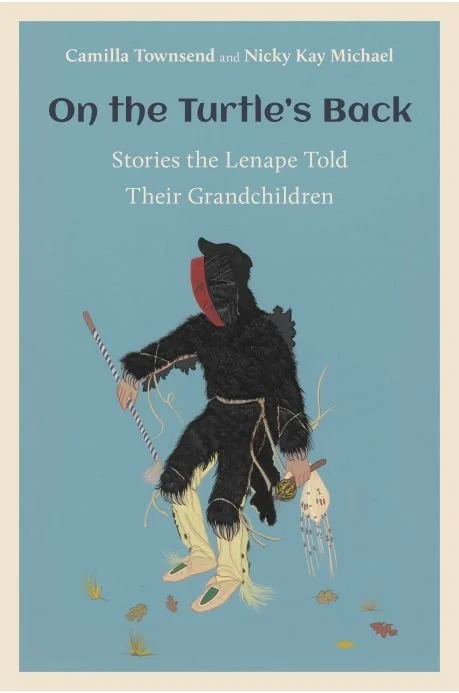
Before we introduce these amazing storytellers, for those who want to follow the Lenape story more deeply, On the Turtle’s Back is an essential read. The book opens a remarkable doorway into a world that was almost lost. In the early 1900s, Julius and Minnie Fouts and Charles and Susan Elkhair sat down with anthropologist M. R. Harrington and shared stories of creation, the Big House, Misingwe, culture heroes, death, family life, and the everyday lessons woven into Lenape tradition. Their accounts remained largely unpublished for more than a century before finally appearing together in this remarkable collection.
Meet the Storytellers
Nora Thompson Dean
(Touching Leaves Woman)
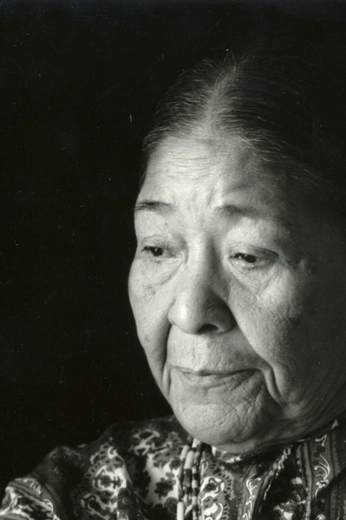
“I heard this story a long time ago when I was a young woman.” With those simple words, Nora Thompson Dean, Weènchipahkihëlèxkwe, Touching Leaves Woman, opens a door into a Lenape world that was rapidly disappearing.
One of the last fluent speakers of Southern Unami, she recorded stories of talking animals, spirits, the Milky Way, the Thunder Beings, and lessons passed to her by generations before. Through her voice, stories once carried from one generation to the next became something future generations could hear for themselves.
(1907–1984)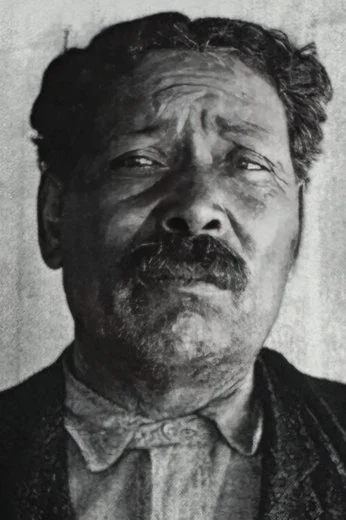
Charles Elkhair
(Kòkwëlëpuxwe)
Sit down with Charlie Elkhair long enough, and the old Lenape world began to appear. There were stories of Misingwe in the forest, the ceremonies of the Big House, strange beings and ancient powers, and a tiny handful of earth raised from beneath the water and placed upon Turtle’s back.
Elkhair did not simply tell stories about that spiritual world. He was part of it. A traditional doctor, he traced his medicine power to a childhood vision of a thundercloud, roaring with heavy rain and thunder.
Elkhair had heard many of the old stories as a child. When he finally told them to M. R. Harrington in the early 1900s, generations of Lenape memory came to life.
1848–1935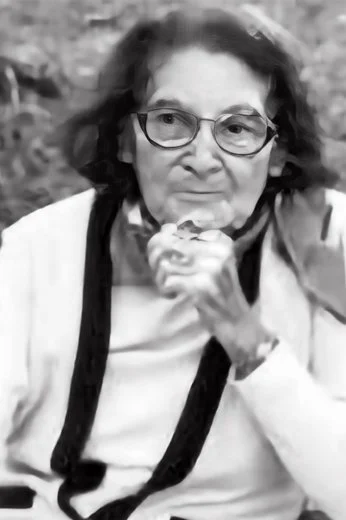
Lucy Blalock did not simply remember the old stories, she could still tell them in her Lenape language. In her voice, hunters set out into the woods, animals spoke, people made mistakes, and lessons hidden inside seemingly simple tales revealed themselves as they had for generations.
Born in 1906, Lucy grew up when fluent Lenape speakers could still be heard around her. In 1964, she was recorded conversing in Lenape with Nora Thompson Dean, two women speaking naturally in a language both had carried from childhood.
Today Lucy’s recorded voice survives, speaking Lenape and telling the stories herself, allowing us not merely to read a piece of Lenape tradition, but to listen to it.
1906–2000Lucy Parks Blalock
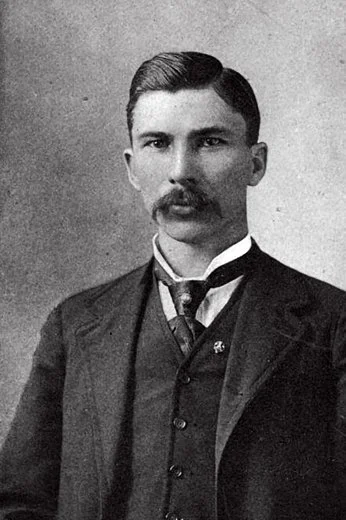
Richard C. Adams
(Thunder Clouds)
Richard C. Adams understood that an old world was slipping away, and he was determined to preserve it on paper. Known as Wee-che-ca-pi-che, “Thunder Clouds,” he gathered Lenape tales of warriors, spirits, giant bears, courtship, fasting, and strange encounters.
At the beginning of the twentieth century, Adams became one of the earliest Lenape authors to publish these traditions himself. His words. His stories. His perspective.
Read Richard C. Adams’s original 1905 Legends of the Delaware Indians
1864–1921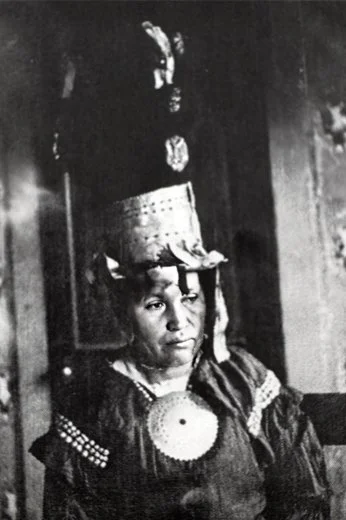
Minnie Fouts
(Wèmeehëlèxkwe)
Her Lenape name meant “Reverberates Everywhere Woman.” More than a century later, her voice is doing exactly that. She shared stories of family, belief, ceremony, and the strange and supernatural. Alongside her husband Julius, she preserved details of Lenape life in her unique voice.
Minnie’s stories also bring us closer to ordinary Lenape life. Behind the ceremonies and supernatural were husbands and wives, children and elders, humor, disagreements, work, and the small lessons that made a story worth telling and remembering.
1871–1949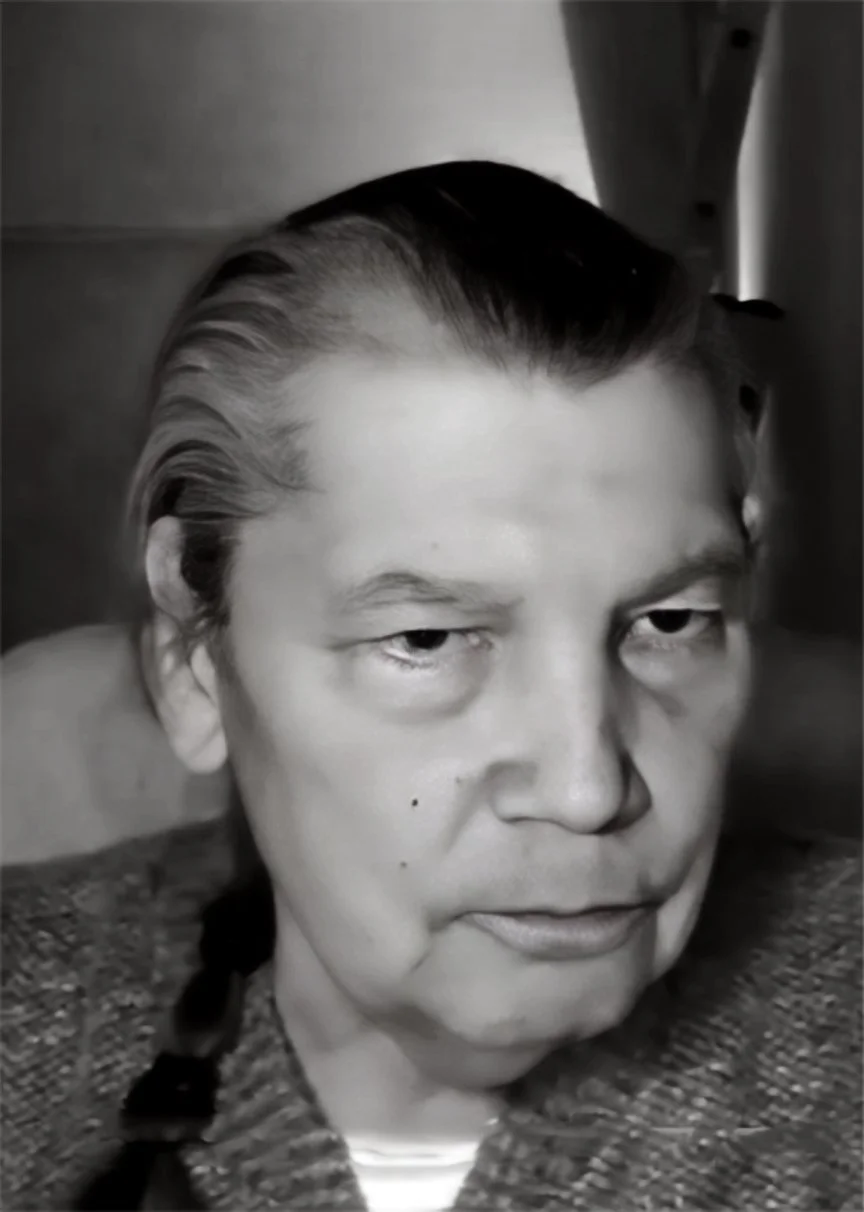
John Nicholas grew up with lessons passed through a family of Munsee knowledge keepers. His parents, Harvey G. Nicholas, known as Gray Owl, and Little Pigeon, wrote the 1974 book Cry of the Ancients. John remembers their teachings as part of everyday childhood: “These were daily lessons that we were taught.”
Gray Owl had himself learned from Munsee elders who helped prepare him as a governmental and spiritual leader. Today, Nicholas carries some of those memories forward, sharing knowledge passed from elders, to his father, to another generation.
John Nicholas
Munsee-Delaware Nation
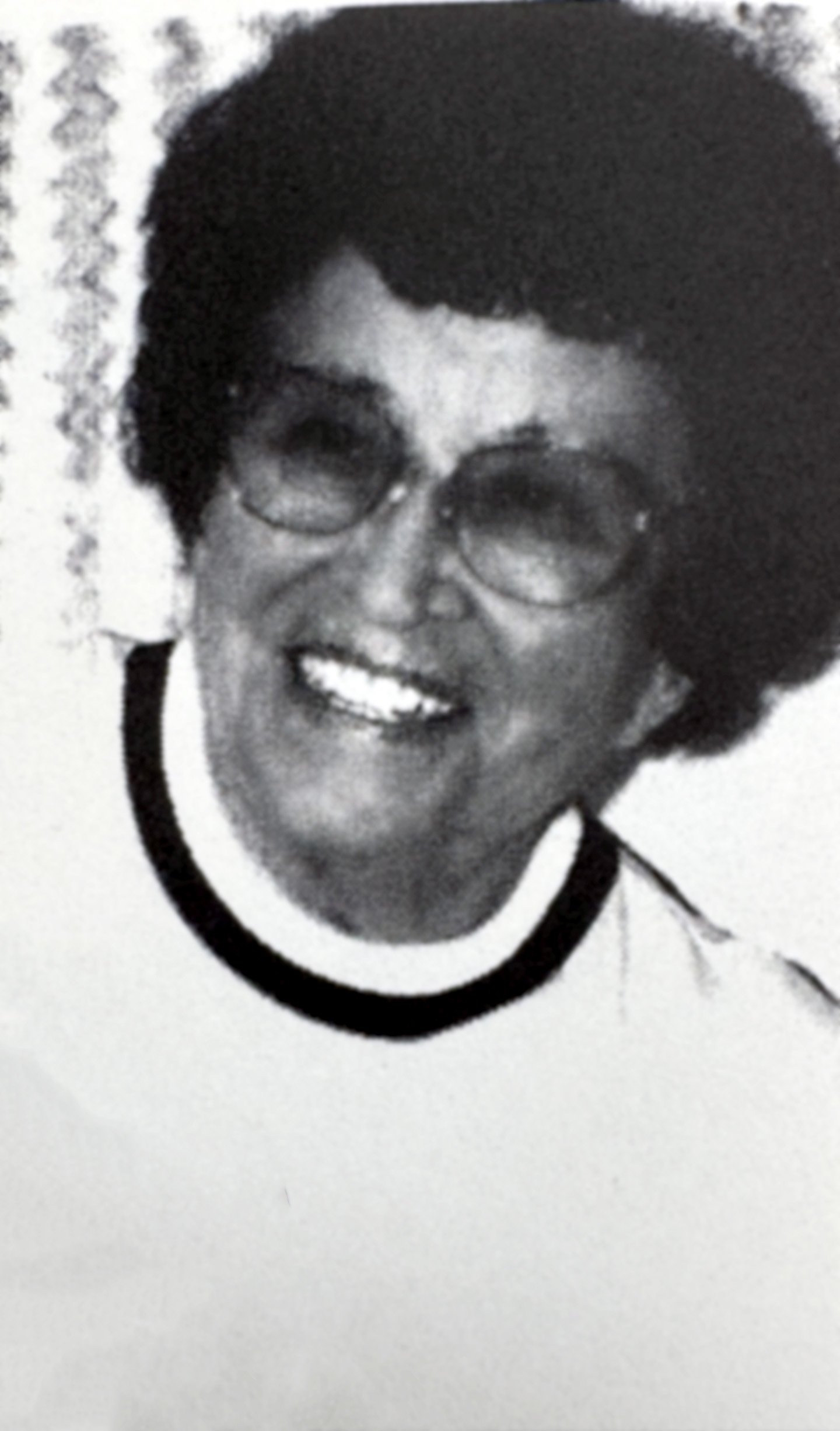
Rosetta “Rosa” Coffey
Rosa Coffey did not have to reach into a distant past to find Lenape history. She had grown up inside it. Born in Dewey Oklahoma in 1925, she knew people whose memories stretched back toward a very different Lenape world, and she carried their stories forward.
Rosa became a tribal leader, served on the Delaware Tribe’s Trust Board, and founded the Delaware War Mothers. When she sat down to share her recollections in 1997, she brought something no history book could offer: the small details, the remembered voices, and the lived experiences that survive only because she stood up and spoke.
1925-2014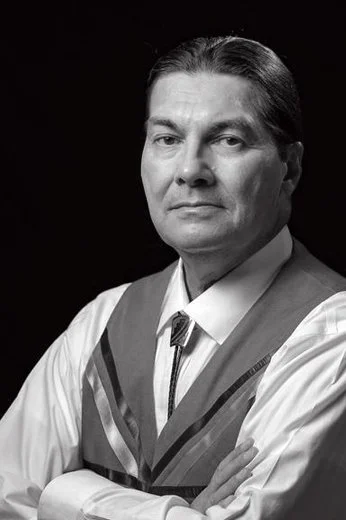
Curtis Zunigha
(He Is Like a Fox)
Curtis Zunigha tells a different kind of Lenape story: the story of what happened next. A former Chief and Cultural Director of the Delaware Tribe, he speaks about removal, survival, language, family, ceremony, and the long struggle to remain Lenape in a world that repeatedly tried to erase that identity.
His storytelling carries the Lenape story into the present. Whether speaking to tribal members, students, or audiences back in Lenapehoking, Zunigha makes one point unmistakable: the Lenape story is still unfolding and has a hopeful future.
Watch Curtis Zunigha tell the story of removal, return, and Lenapehoking
b. 1953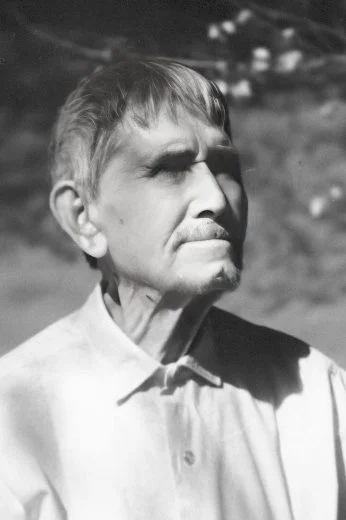
James H. Thompson
Ohëlëmitakwsi
In 1963, at ninety-five, James H. Thompson sat listening as his daughter, Nora Thompson Dean, read to him in Lenape. His quiet response was simply, “Na nàni” - “That’s it.” It was a small exchange between father and daughter, and between two generations that would help carry Lenape language and stories forward.
The distance Thompson had traveled in one lifetime was extraordinary. Born in 1867, when Native hunters still pursued great herds of buffalo on the Plains, he lived well into the age of jets and rockets. Yet he continued passing on what he knew, working with researchers to preserve Lenape language, songs, and customs.
In 1963, he adopted young language researcher Jim Rementer as his grandson, beginning a family connection that would help carry that work forward after Thompson was gone.
1867–1964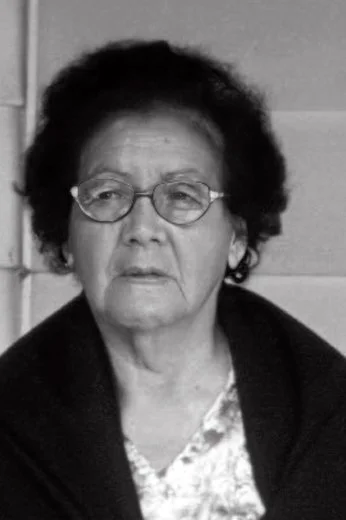
Lillie Hoag Whitehorn
“Yukweshe nkata achimwi naka nuhëma tihëlachimwin òk nkahèsa.” (“Now I want to tell a story the way my departed grandmother and mother did”). With those words, Lillie Hoag Whitehorn reached backward through generations and began again. Her stories could be gentle and familiar, but inside them lived power: love and death, thunder and healing, ceremony, humor, and the strength of Lenape women.
Lillie had a gift for making old teachings feel close. When she spoke in Lenape, the past did not feel like history. It felt like someone had pulled up a chair beside her and started to chat.
1902–1994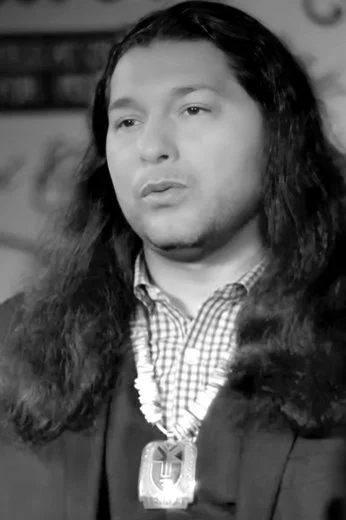
Daniel StrongWalker
Thomas
Daniel StrongWalker Thomas does not tell Lenape history quietly. He walks boldly into the stories America has told about his people and turns things around. Through art, film, public speaking, and advocacy, Thomas brings a contemporary Lenape voice to histories of removal, lost homelands, and survival.
Perhaps nowhere is that more powerful than the PBS-broadcast documentary Burying the Hatchet: The Tom Quick Story, which Thomas helped produce. The film confronts the legend of a frontier figure celebrated for killing Lenape people. This time, the Lenape were not characters in someone else’s telling. They were present to give their own account.
Watch the full documentary on PBS: Burying the Hatchet: The Tom Quick Story
b. 1979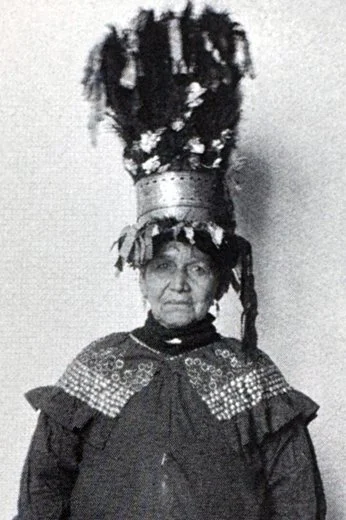
Susan Elkhair
(Kicilungonexkwe)
Susan Elkhair knew things no book could have taught. Born around 1849, she had learned by listening: to family, to elders, to the stories and beliefs spoken around her long before anyone thought to write them down. When M. R. Harrington arrived in Oklahoma in the early 1900s, Susan did something deceptively simple. She sat down and talked.
What came out was not a performance of some vanished past. It was the world as Susan knew it: family and marriage, strange beings and old beliefs, humor, warnings, everyday life, and the things people whispered about when the fire burned low. Harrington brought the notebook. Susan brought the world that filled it.
1849–1925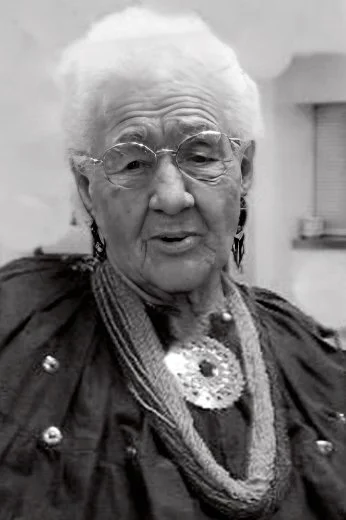
Bonnie Thaxton had the kind of memory that could turn a name, a place, or an old family story into a doorway. Born in 1923, she grew up close enough to an older Delaware world to remember her grandmother Mary Wilson speaking the language. She attended Haskell, where Native students were forbidden to speak their own languages, and went on to spend decades involved in Delaware tribal life, including the Elders, War Mothers, and Cultural Preservation committees.
Well into her nineties, Bonnie was still there, attending elder gatherings, participating in tribal life, and carrying memories of the generations that came before her. In 1997, she sat for an interview whose recollections now close the extraordinary group of elder voices preserved in On the Turtle’s Back.
Bonnie Thaxton
b. 1923
Ruben Wilson
Reuben Wilson became the last known Lenape to sing his personal vision song inside the traditional Big House Church, part of a ceremonial tradition that Lenape people had carried with them through generations of displacement and migration.
Reuben was a storyteller at heart, but his stories were not carried by words alone. They lived on in the songs he sang, the Stomp Dances he led, the traditional bows he created by hand, and the memories he carried in his heart
His storytelling eventually traveled far beyond the Big House. Reuben shared his knowledge with anthropologist Frank Speck and later Bruce Pearson and Jim Rementer, preserving stories, songs, language, and memories for generations he would never meet. He even carried traditional Lenape songs onto the radio.
1899–1970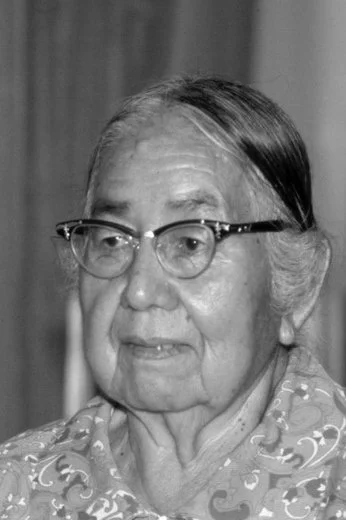
In 1966, Martha Ellis sat down with Ives Goddard, began to reminisce, and an older Lenape world came pouring out. Rabbit jumped, animals gathered in council, deer and buffalo spoke, and an ancient story once again unfolded in the language in which it had been told for generations.
Born Martha Snakeman, Ellis became an important source for linguist Ives Goddard’s work with the Lanape people. But perhaps the most remarkable thing Martha left us was her voice. More than half a century later, we can still press play and hear her voice telling The One Called Rabbit in Lenape.
b. 1901-?Martha Ellis
(Martha Snakeman)
Julius Fouts
(Petaʹnĭhink)
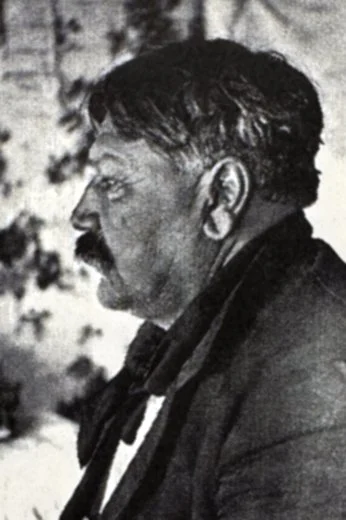
Julius Fouts witnessed how something precious could easily slip away. Born in 1862, Julius heard stories from his parents and grandparents that had already traveled more than a thousand miles, carried westward through displacement and migration, kept alive as best they could.
Known in Lenape as Petanihink, Julius understood the importance of what he had inherited. Working with anthropologist M. R. Harrington, he served as an interpreter and shared Lenape traditions, ceremonies, beliefs, and memories. Together with his wife, Minnie, he opened a door into the Lenape world few outsiders had ever stepped through.
1862–1926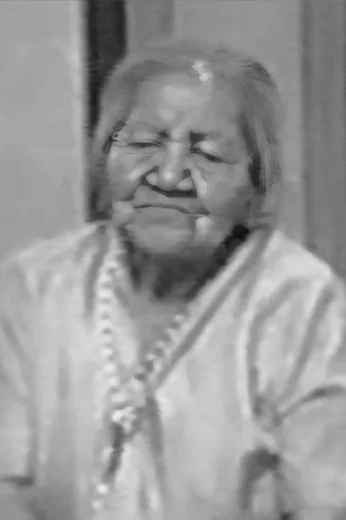
Bessie Hunter Snake lived for 103 years, long enough to watch one world become another. Born in Indian Territory in 1896, she grew up speaking Lenape and hearing the old stories from those around her. She carried a command of the language, its humor, rhythms, and ways of telling a tale that would become increasingly rare during her lifetime.
Bessie was a master storyteller. When researchers recorded her in 1978, they captured her telling traditional accounts in Lenape, including Give Us a Little Piece of Your Land. Her voice preserved something a written transcript never could: the sound and cadence of the tradition itself.
Bessie died in 1999. Her voice did not. Click the play button today, and the distance between her world and the present disappears.
Bessie Hunter Snake
(1896–1999)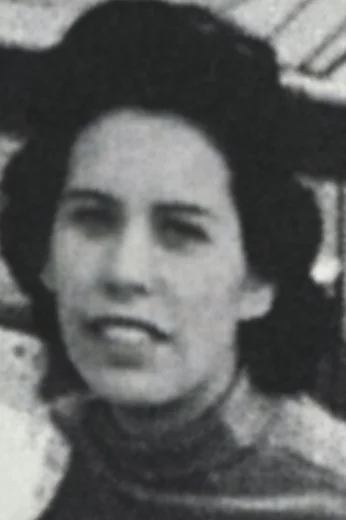
Pat Donnell
Pat Donnell grew up surrounded by a heritage she was not fully taught to see. Her mother’s experience at Indian boarding school had taught her that being Indian could carry a cost, and she wanted to protect her children from what she herself had endured. Looking back, Pat remembered, “We didn’t know that much about it because we weren’t taught that till we were older.”
As a girl, she attended Native gatherings with her Aunt Kate, playing while adults visited, ate, rodeoed, and performed. Only later did she understand what had been around her all along. As an adult, Pat watched a younger generation begin reclaiming the language and heritage that her own generation had not always embraced.
Her conclusion was simple “We’ll survive. It’s never been easy for the Indian people anyway.”
circa 1920's - ?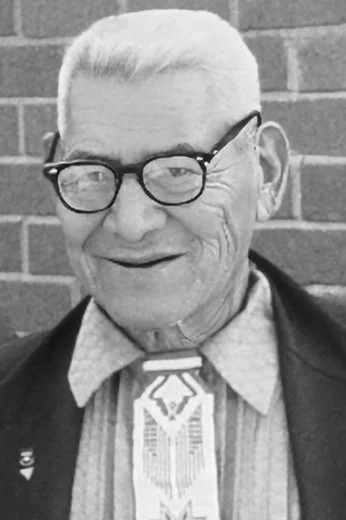
The ball disappeared beneath a tangle of bodies. Men kicked for it. Women reached in with their hands. Shirts tore, people shouted, and somewhere along the edge of the field bets were made. This was Pahsahëman, the old Lenape ball game, and Willard knew it well.
Born in 1905, Willard Thomas carried with him the Lenape language along with countless details of everyday life. He later worked with linguists Ralph Cooley and Duane Hale, sharing words, stories, traditions, and pieces of a world that could never be captured by vocabulary alone.
Through Willard, we glimpse something history too often leaves out: Lenape laughing, competing, arguing over a call, and playing to win.
(1905–1988)Willard Thomas

John “Sawatis” Moses
Delaware and Upper Mohawk bands at Six Nations
John “Sawatis” Moses grew up where two great histories met. At Six Nations of the Grand River, both Mohawk and Lenape blood ran through his family. He proudly identified himself as both: Kanyen’keháka and Lenni Lenape.
That inheritance shaped his life’s work. John worked with Indigenous cultural objects and in repatriation, helping return sacred and important belongings from museums to the communities from which they came. Sometimes it was something that needed to go home.
For John, the past was never truly past. It was family, identity, responsibility, and something still very much alive.
b. 1960