RaritanLenape.org > Lenape People / Stories > Historic Lenape Leaders
Historic Lenape Leaders
For thousands of years, Lenape communities governed themselves, settled disputes, formed alliances, and made decisions affecting their people, communities, and homelands. Leadership was central to that enduring story.
But after European contact, Lenape leaders faced a crisis unlike anything their ancestors could have imagined. Disease and upheaval devastated Lenape communities, causing enormous population losses within only a few generations.
As their population declined, Lenape communities faced relentless pressure from expanding European settlement, broken agreements and deception by colonial leaders, and increasingly difficult choices between diplomacy, resistance, migration, and war.
Those decisions did not fall to a single leader. The Lenape were not governed as a single centralized nation. Individual communities had their own leaders, often called sakima or sachems, whose authority depended largely on respect, wisdom, diplomacy, and their ability to persuade others. They did not simply command. They had to lead.
The leaders featured below represent only a small selection of Lenape leaders across centuries, chosen because their lives are comparatively well documented and their stories illuminate important moments in Lenape history.
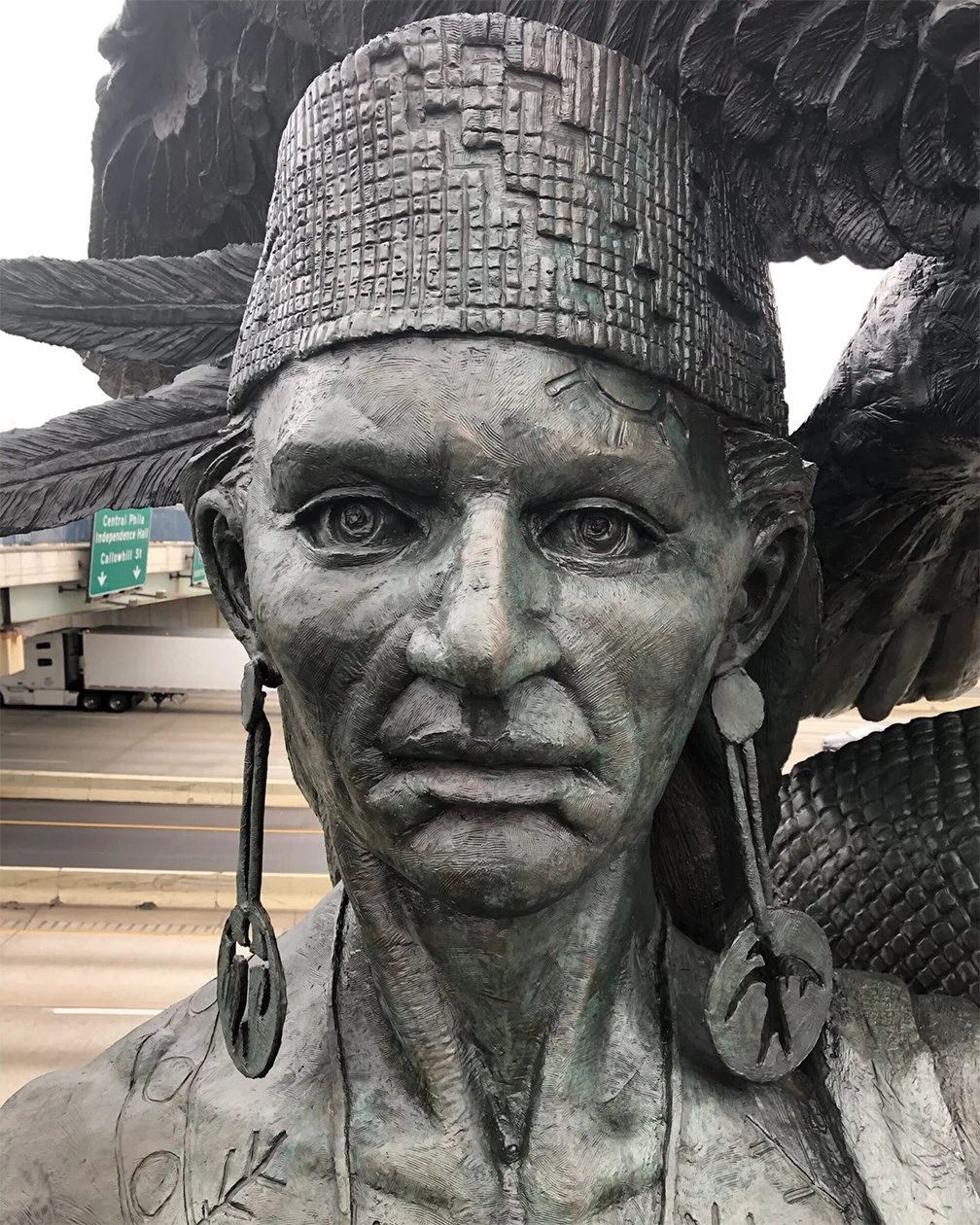
Tamanend
Tamanend (c.1625–c.1701) was a respected Lenape leader who sought peace as William Penn and other settlers entered the Lenape homeland. His name became a symbol of friendship between two peoples, even as the promises connected to that friendship were later broken. (more…)

Oratam
Oratam (c.1577–c.1669) was one of the most influential Lenape leaders of seventeenth-century New Jersey. As sakima of the Hackensack Lenape, he spent decades navigating war, colonial expansion, and the transfer of his homeland from Dutch to English rule. (more…)
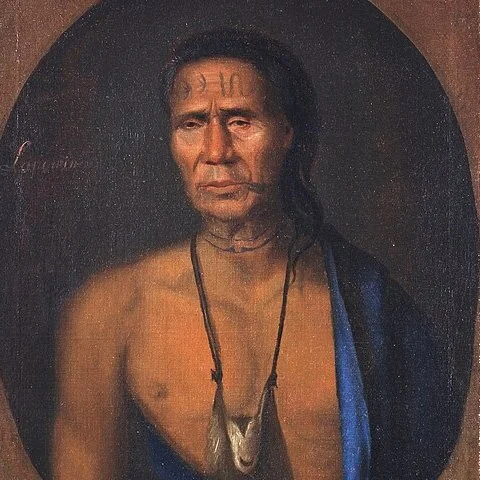
Lapowinsa
Lapowinsa (c. 1670–c. 1740) watched the promises of friendship and fair dealing made to the Lenape give way to the relentless push for their land in the notorious Walking Purchase in Pennsylvania. (more…)
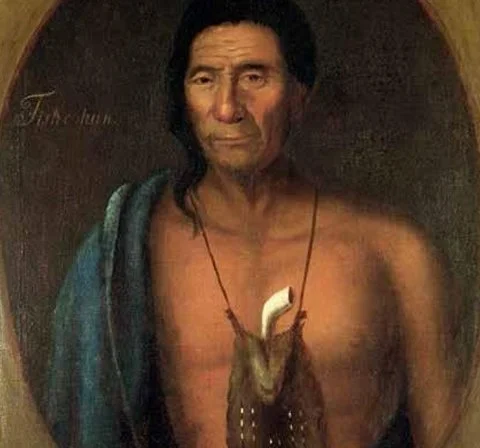
Tishcohan
Tishcohan (c. 1680–c. 1750) stood at the center of one of the great land struggles in Lenape history. As settlers pushed deeper into the Delaware Valley, he negotiated with colonial officials while trying to defend Lenape interests in a world where agreements on paper increasingly determined who would control the land. (more…)
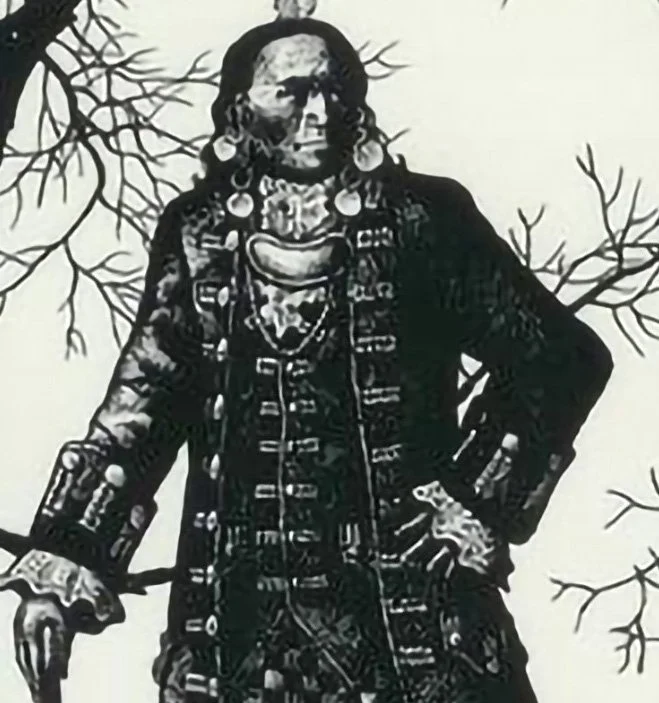
Teedyuscung
Teedyuscung (c.1700–c.1763) became known to colonial officials as the “King of the Delawares,” a title that gave a European name to a far more complicated kind of Lenape leadership. He used that growing authority to confront colonial governments over lost lands, broken promises, and the future of his people. (more…)
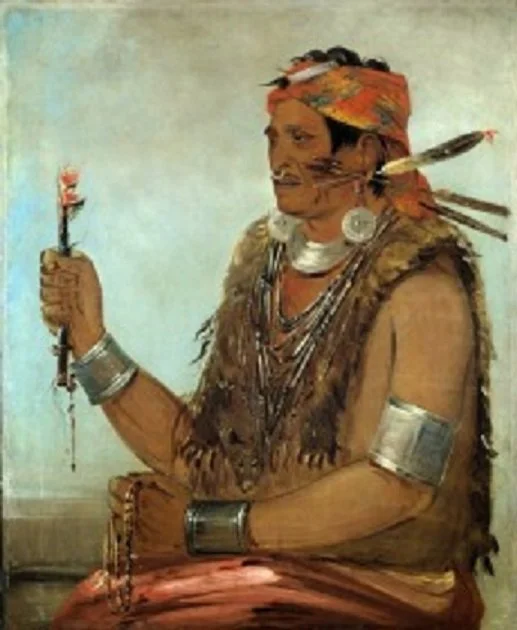
Neolin
Neolin (c.1720–c.1770) In the 1760s, a Lenape man named Neolin emerged with a startling message: the world had fallen out of balance, and Native people had to find their way back. Known as the Delaware Prophet, he called on Native people to reject European influences and renew older ways of living. His message traveled far beyond his own community, helping inspire a spiritual revival that echoed across Native nations of the Great Lakes and Ohio Country. (more…)
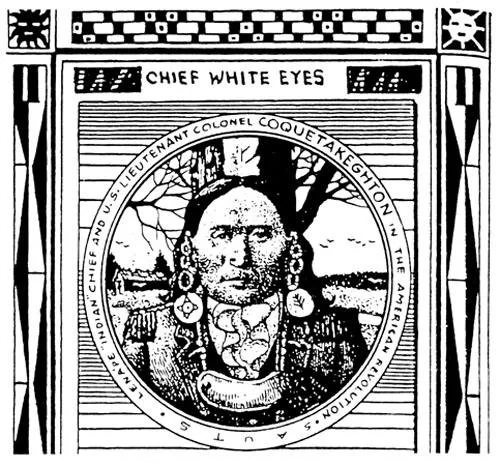
White Eyes, Koquethagechton
White Eyes, Koquethagechton (c. 1730–1778) By the summer of 1778, White Eyes was trying to hold his people together while a revolution closed in around them. Known in Lenape as Koquethagechton, he had become one of the most influential Lenape leaders in the Ohio Country, navigating between British forces, American revolutionaries, and Lenape communities divided over which path offered the best chance for their future. He pursued diplomacy and peace, but before the year was over, he would be dead. (more…)
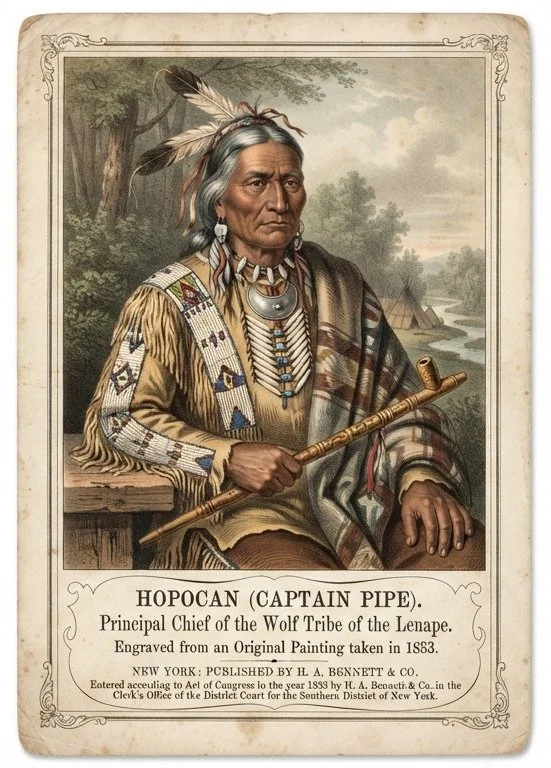
Hopocan (Captain Pipe)
Hopocan (Captain Pipe) (c. 1725–c. 1818) Hopocan began the American Revolution seeking peace and ended it fighting the Americans. Known as Captain Pipe, he watched diplomacy fail, violence consume Lenape communities, and the choices available to their leaders narrow dramatically. By war's end, he had emerged as one of the strongest Lenape voices for armed resistance. (more…)
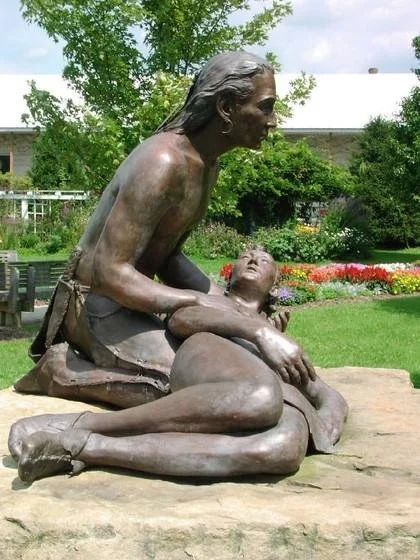
Buckongahelas
Buckongahelas (c. 1720–1805) became one of the most formidable Lenape war leaders of his era. As American settlement pushed into the Ohio Country, he rejected accommodation and joined a broader Native resistance determined to stop that advance. His warriors would take part in some of the most consequential fighting between Native nations and the young United States. (more…)
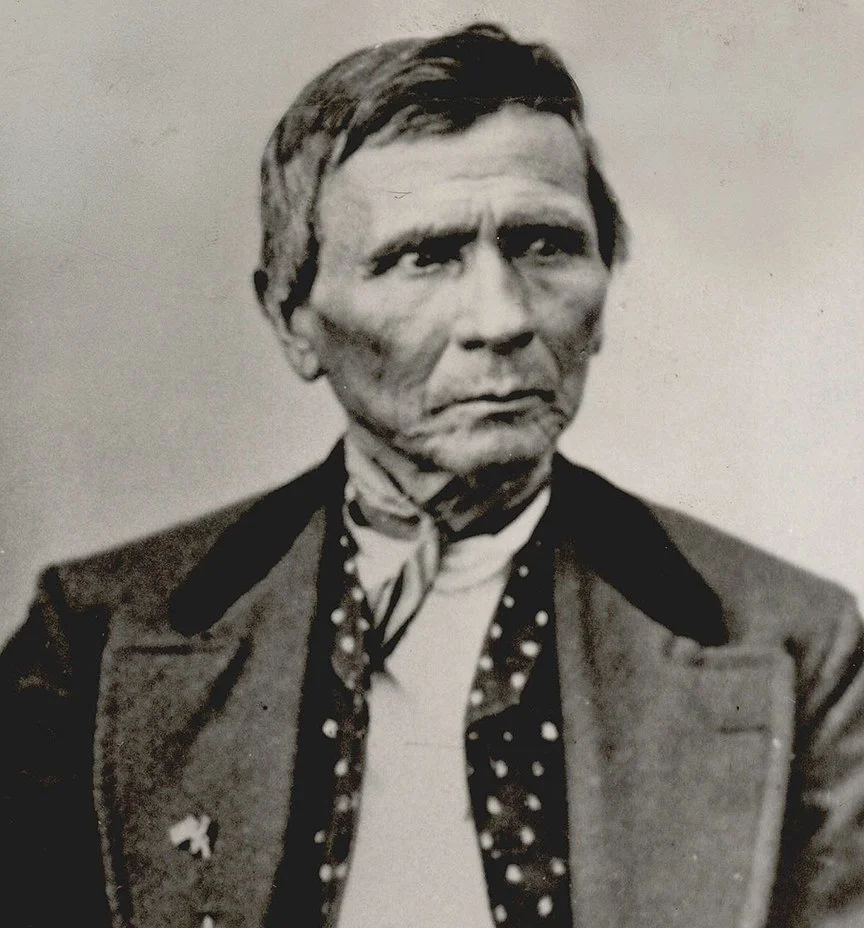
Black Beaver,
Se-ket-tu-may-qua
Black Beaver (1806–1880) Few Lenape leaders traveled as far, or knew as much of the continent, as Black Beaver. Born in 1806, Se-ket-tu-may-qua became a renowned guide, interpreter, diplomat, and traveler whose journeys carried him across enormous stretches of North America. His knowledge of the land became legendary, placing a Lenape man at the center of some remarkable episodes in the history of the nineteenth-century West. (more…)
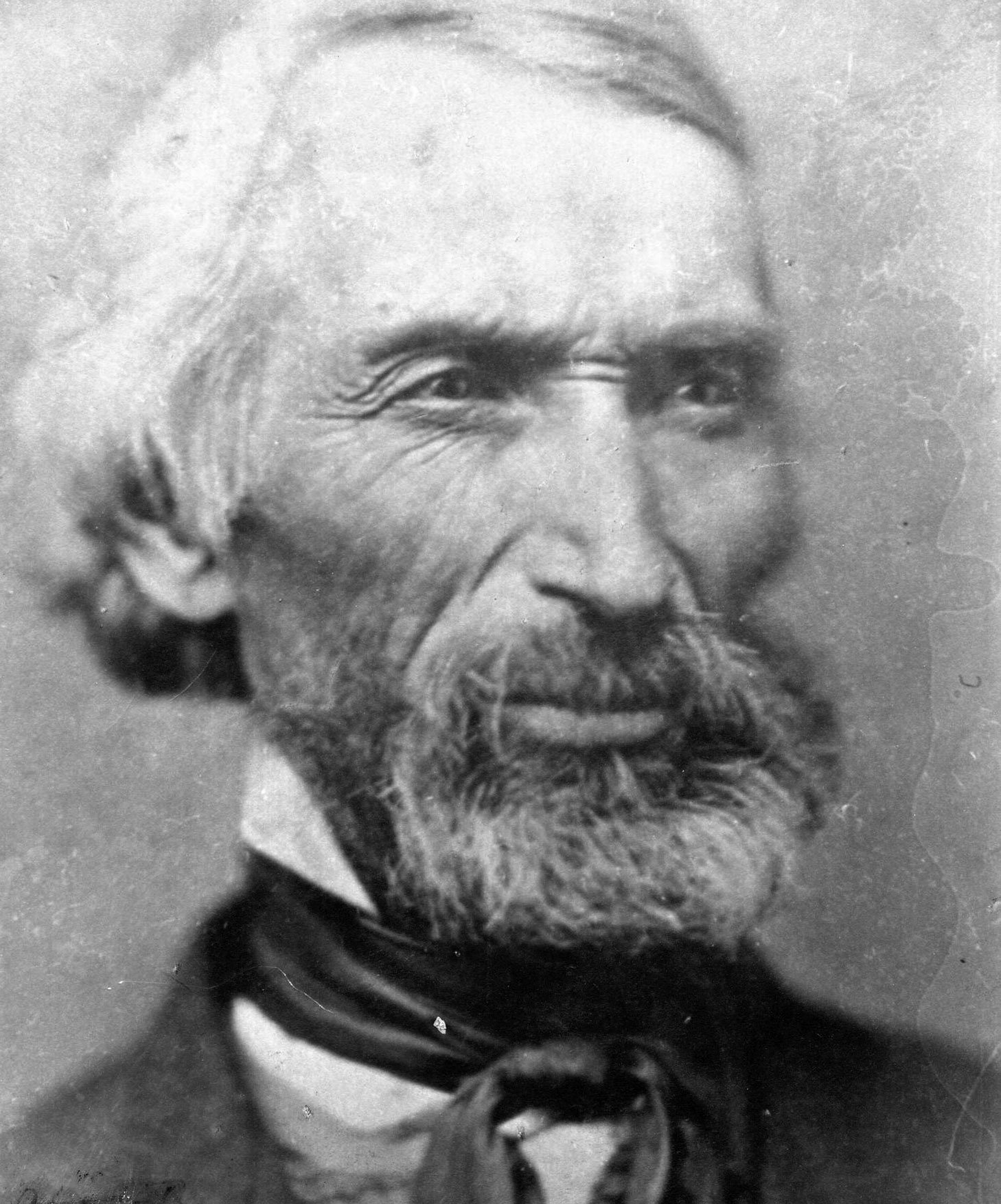
Charles Journeycake,
Ne-sha-pa-na-cumin
Charles Journeycake (1817–1894) inherited a struggle very different from those faced by the Lenape leaders who came before him. Much of the homeland was already gone. As chief, diplomat, and Baptist minister, Ne-sha-pa-na-cumin helped his people confront new threats to their land while undertaking the difficult work of rebuilding community and preserving Lenape identity in Indian Territory. (more…)
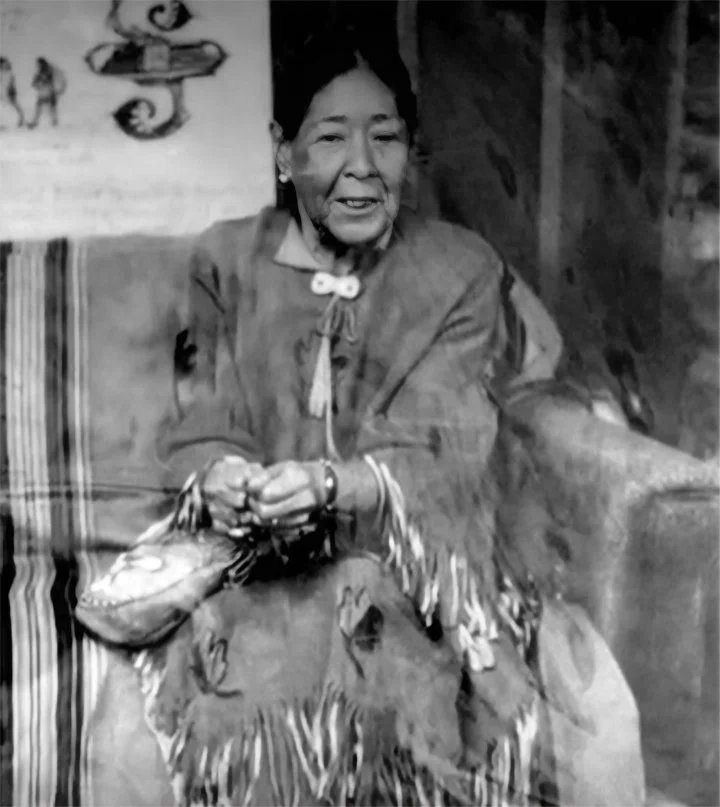
Nora Thompson Dean, Weènchipahkihëlèxkwe
Nora Thompson Dean (1907–1984), “Touching Leaves Woman,” led not through political office, but through knowledge. As fluent speakers became fewer and generations of Lenape knowledge were increasingly at risk, she taught the language, recorded traditions, worked with researchers, and shared what elders had passed down to her. She became one of the most important Lenape cultural voices of the twentieth century.(more…)
Leadership Continues
Lenape leadership did not end with removal, or with the leaders whose stories appear on this page.
Today, Lenape communities in the United States and Canada continue to govern themselves, protect their languages and cultures, care for their citizens, and determine their own futures.
More than three centuries after Tamanend and Oratam, and thousands of years after their ancestors first called this land home, Lenape people continue to choose their own leaders and shape what comes next.