RaritanLenape.org > Lenape People / Stories > Women in Lenape Life
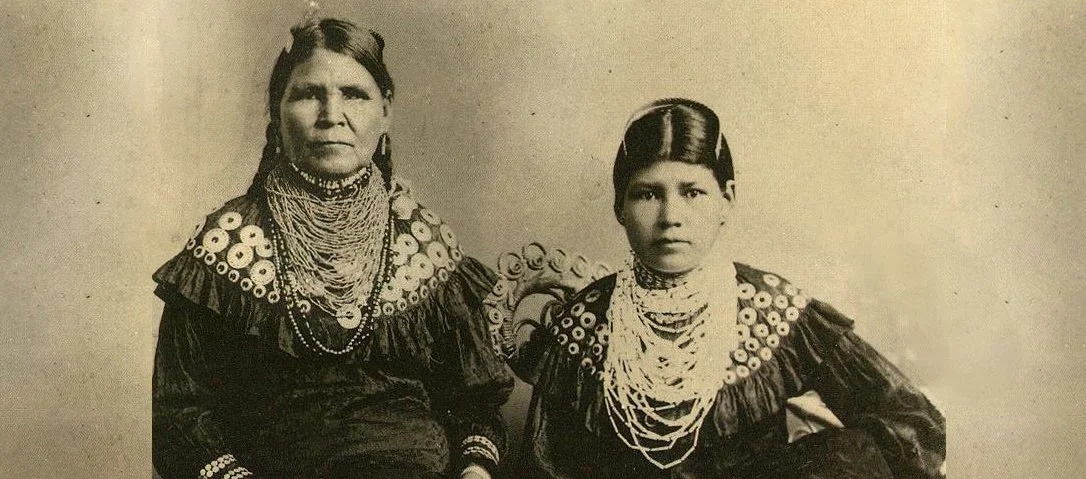
nichan nkahès ntèhëm
My daughter my mother my heart
Women in Lenape Life
The lives of Lenape women were bound together across generations. A daughter learned from her mother, who carried the teachings of her own mother, grandmother, and aunties. Knowledge moved through families in ways both practical and deeply personal.
For a Lenape girl growing up along the Raritan, the women around her would have been her teachers and guides, showing her not only how to provide for a family, but how to understand her responsibilities within it and her place within the larger circle of clan and community.
The work of Lenape women was important in keeping families and communities alive.
They cultivated corn, beans, and squash that provided much of the community's food. They gathered from the landscape, prepared meals, and dried and stored the harvest for the winter ahead. Lenape women made clothing, created clay pots, and produced many other necessities of everyday life. These responsibilities were demanding, repeated season after season, and carried from one generation of women to the next. The survival of their people depended upon them.
Family extended far beyond mothers, fathers, and children.
Grandparents, aunts, uncles, cousins, and other clan relatives formed a larger circle of family around a child. Related families often lived together or nearby, sharing work, knowledge, food, and responsibility for one another. Children therefore grew up surrounded by relatives whose roles in their lives could extend well beyond what we now think of as the immediate family.
Women carried authority.
Lenape society traditionally traces descent through the female line, giving senior women considerable influence within their families and clans. Leadership was closely tied to these family relationships. Senior women had an important voice in choosing a sakima, or leader, from among eligible men. European observers, accustomed to societies in which family and political authority was overwhelmingly male, did not always recognize, acknowledge, or comprehend the influence Lenape women exercised.
Lenape women are survivors.
One story preserved in history is that of Hannah Freeman, a tenacious Lenape woman whose life became an example of perseverance and survival. Born along the Brandywine around 1730, Hannah fled with her mother, grandmother, and aunts to New Jersey after violence against Indigenous people erupted in Pennsylvania in 1763. Years later, she returned to her homeland and continued to support herself through farming, basketmaking, and work for neighboring families. She became known for her knowledge of healing and medicinal plants, drawing upon knowledge passed through generations of Lenape women. Through decades of displacement and profound change, Hannah endured, holding on to the knowledge, traditions, and tenacity of her people.
The Lenape women who lived along the Raritan raised families, cultivated the land, carried knowledge across generations, and helped shape the decisions that guided their communities. Most of their names have been lost to history, but their presence has not.
Raritan Lenape Women.
We know some of the Lenape men who appear in the earliest deeds for land along the Raritan, the Millstone, and the North and South Branches, including Konackama and Queromack, Pawarone and Weimenes, and Paywarren. Yet no Lenape women have been identified by name in the surviving Raritan Valley deeds we have found.
Archaeology and early accounts, however, reveal much about the work that shaped Lenape women’s lives. They tended crops of corn, beans, and squash and gathered nuts, berries, roots, and plants used for healing. They prepared shad, catfish, and other fish from the rivers and game from the surrounding forests, while also making clothing, baskets, pottery, and many of the necessities of daily life. As winter approached, women dried and stored food that would help sustain their families through the cold months ahead.
Their world was the Raritan itself: fertile river terraces and wetlands, tributaries rich with fish, hardwood forests filled with deer and wild turkey, and, downstream, the broad estuary and Raritan Bay with its abundant fish and shellfish. From season to season, this varied landscape provided an extraordinary range of resources for the communities that called it home.
From the broad Raritan and the Millstone to the North and South Branches and the wooded slopes of the Watchungs, women were essential to the life of this remarkably rich valley.
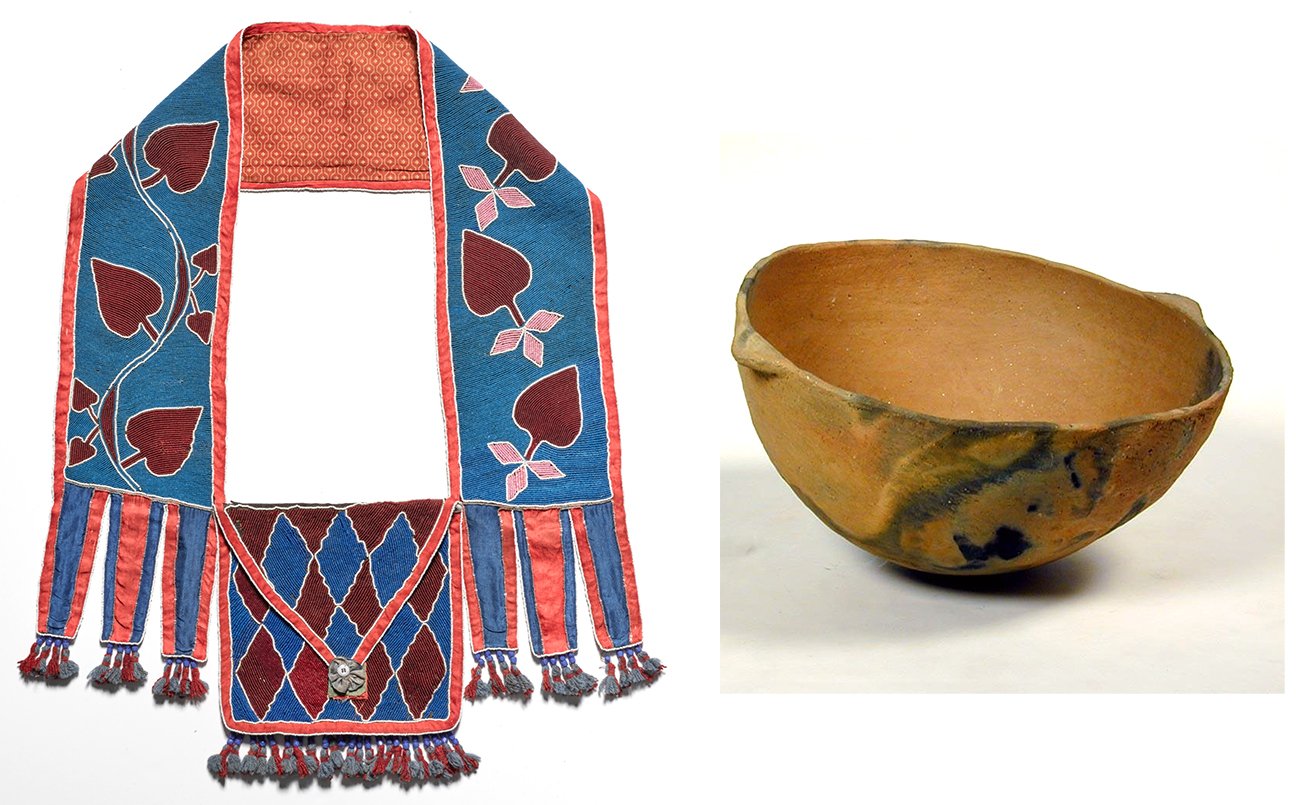
Lenape (Delaware) bandolier bag, c. 1850. By the nineteenth century, Delaware women were creating elaborate beadwork like that seen on this bandolier bag, adapting new materials such as glass beads and cloth into distinctive Lenape designs. National Museum of the American Indian
Sussex County, Delaware Woodland pottery 500–1350 CE This pottery vessel was found in Sussex County, Delaware, within Lenapehoking. It reflects a ceramic tradition practiced largely by Indigenous women.