RaritanLenape.org > Lenape People / Stories > Lenape Leaders > Tamanend
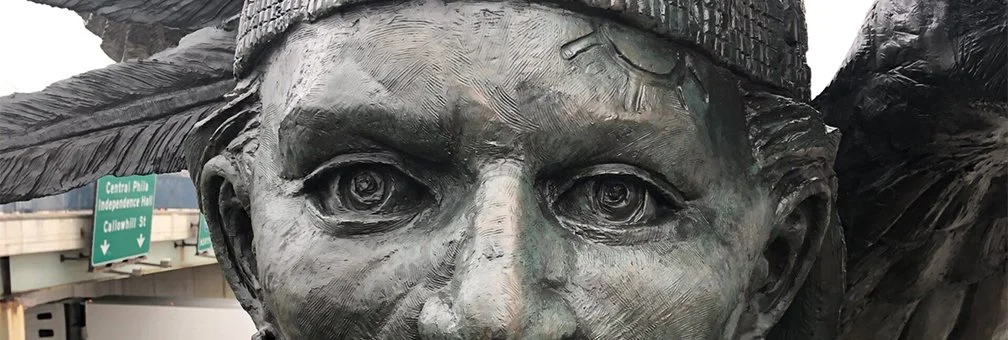
Tamanend, Turtle Clan sakima
In the early 1680s, Tamanend stood at the center of an extraordinary encounter. William Penn and a growing number of English settlers were entering the Lenape homeland. Through meetings, negotiations, and agreements, Tamanend helped establish a relationship between the Lenape and Pennsylvania’s new colonists that contributed to nearly fifty years of relative peace.
Tamanend emerged as one of the most respected Lenape leaders in the Delaware Valley during the late seventeenth century. His name was recorded in several forms, including Tamanen, Tammany, and Taminent. Although the details of his life remain uncertain, he is believed to have lived from approximately 1625 to 1701.
Tamanend was not a ‘chief’ or the ruler of all Lenape people. Each Lenape community had its own leaders, and important decisions were reached through discussion and agreement. His standing came from his reputation, his skill as a diplomat, and the confidence he had earned.
Tamanend and William Penn
On June 23, 1683, Tamanend and other Lenape leaders entered into a series of documented land agreements with William Penn. These records provide the clearest historical foundation beneath the later story of Penn’s “Great Treaty” with the Lenape.
Tamanend did not sign his name in English. On one document, he placed his own mark beside the name written for him by a colonial clerk: a coiled snake. More than three centuries later, it remains one of the few surviving marks made by Tamanend himself. Its particular meaning is unknown.
According to tradition, Tamanend and other Lenape leaders met Penn beneath a great elm at Shackamaxon, along the Delaware River. There, the two peoples promised to live in peace for as long as the rivers flowed and the sun, moon, and stars remained in the sky.
No treaty document or contemporary account of one grand meeting survives. The story may combine memories of several meetings and agreements from Penn’s early years in Pennsylvania. Tamanend’s documented participation in the agreements of 1683 gives the tradition a historical foundation, but its exact words, location, and ceremony remain uncertain.
Two understandings of the land
Penn and his representatives treated the agreements as purchases transferring ownership of defined territories. Tamanend and other Lenape leaders likely understood at least some of these agreements differently, perhaps as arrangements allowing settlers to occupy and use the land while establishing an enduring relationship between peoples.
The Lenape and the English brought fundamentally different understandings of land to these agreements. English officials relied on written deeds, surveyed boundaries, and permanent ownership. Lenape agreements were about relationships, maintained through diplomacy, mutual obligations, gifts, and continued respect.
Colonial officials eventually used the language of written deeds to claim exclusive ownership of vast territories, including lands that Lenape communities continued to inhabit, hunt, and use. This clash over the meaning of land and ownership helped drive generations of dispossession and conflict.
The peace is undermined
From about 1682 to 1737, the relationship associated with Penn and Tamanend helped maintain peace. But that peace did not last. Colonial settlement expanded, pressure for Lenape land intensified, and Pennsylvania’s leaders increasingly treated written deeds as permanent transfers that excluded Lenape families from places they had continued to inhabit, hunt, and use.
After William Penn’s death, his sons abandoned much of his more conciliatory approach. The most notorious betrayal came with the Walking Purchase of 1737. Pennsylvania officials used a questionable old deed and a carefully prepared, fast-paced “walk” to claim an enormous area of Lenape land. Lenape objections were rejected, and families were compelled to leave much of the upper Delaware Valley.
The peace remembered through the names of Penn and Tamanend was therefore not simply lost. It was undermined by expanding settlement, unequal power, disputed deeds, and colonial leaders who failed to honor the relationship earlier agreements were supposed to protect.
From Tamanend to “Saint Tammany”
After Tamanend’s death, colonial Americans gradually transformed him from a historical Lenape leader into a symbol of friendship, honor, and peaceful relations.
Benjamin West’s famous painting, Penn’s Treaty with the Indians, completed in 1771–1772, presented an imagined version of Penn’s meeting with the Lenape. No known portrait of Tamanend was created during his lifetime, and there is no evidence that West knew what he looked like. Later paintings and statues are symbolic representations, not reliable likenesses.
By the Revolutionary era, colonists were celebrating Tammany Day on May 1. Tamanend was praised as “King Tammany,” “Saint Tammany,” and even the “Patron Saint of America,” a distinctly American alternative to the saints and symbols inherited from Christian Europe.
Political and fraternal societies adopted his name. The most famous was New York’s Society of St. Tammany, founded in 1789, which eventually developed into the powerful political organization known as Tammany Hall. By then, Tamanend’s name had become separated from much of his actual Lenape history.
The Treaty Elm and Later Memorials
The great elm associated with the traditional meeting at Shackamaxon became a Philadelphia landmark and a symbol of peaceful relations. It reportedly survived until 1810, when it fell during a storm. Pieces of its wood were preserved and fashioned into chairs, boxes, and other commemorative objects.
In 1817, a carved figure intended to represent Tamanend became the figurehead of the warship USS Delaware. It was later installed at the United States Naval Academy, where generations of midshipmen called it “Tecumseh.” The figure remains at Annapolis, its mistaken name now almost as famous as its original identity.
In 1827, an obelisk was erected near the traditional treaty site at Shackamaxon. By then, the meeting beneath the elm had passed from uncertain history into civic legend, remembered less for its precise details than for the promise of peace it represented.
Tamanend’s Legacy
There is a deep irony in Tamanend’s later fame. Americans celebrated him as a symbol of peace even as Lenape communities were being dispossessed and displaced from their homeland. His name appeared on festivals, political societies, statues, ships, and monuments, while the people he represented were pushed steadily westward.
Tamanend should not be remembered merely as a supporting figure in William Penn’s story or as the imagined “Saint Tammany” of later American legend. He was a Lenape leader confronting the arrival of a powerful new population and attempting to protect his people’s interests through diplomacy.
The peace associated with his name was not Penn’s achievement alone. Tamanend and other Lenape leaders helped create it. Later colonial leaders helped destroy it.
Discover More
Treaty of Shackamaxon
A careful examination of the famous meeting between Tamanend and William Penn, including what is documented and what remains part of tradition.Native American–Pennsylvania Relations, 1681–1753
Places Tamanend’s diplomacy within the larger history of Lenape relations with William Penn and Pennsylvania’s expanding colonial government.An academic examination of Tamanend, William Penn’s legendary treaty, the surviving historical evidence, and how the meeting became part of American memory
Benjamin West’s Penn’s Treaty with the Indians
The Pennsylvania Academy of the Fine Arts presents the most famous artistic representation of Penn’s meeting with the Lenape. Painted in 1771–1772, it is an imagined historical scene rather than a lifetime portrait.The Tamanend Statue in Philadelphia
The history and symbolism of Raymond Sandoval’s monumental bronze representation of Tamanend.Video: Tamanend’s Legacy of Peace
A short commemorative video from the Pennsylvania House of Representatives introducing Tamanend and his place in Pennsylvania history.