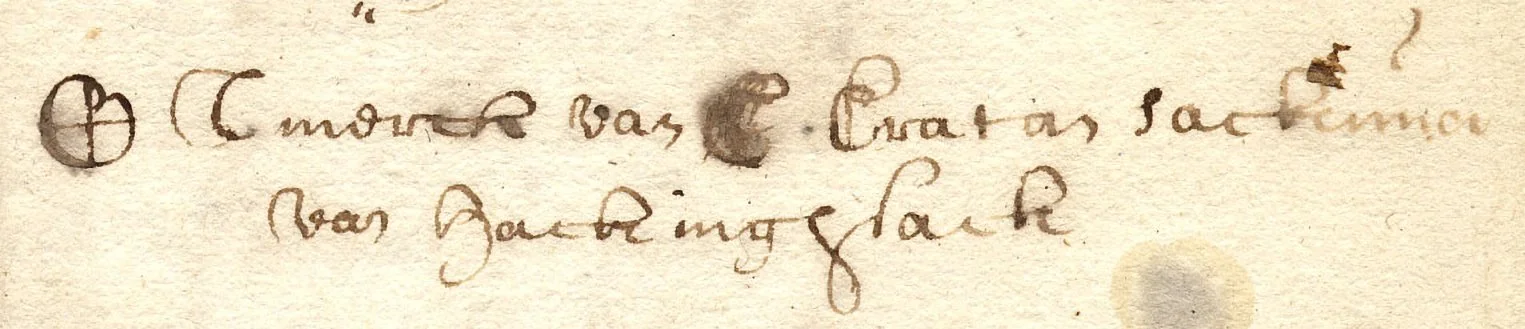
Oratam, Hackensack sakima
For more than a generation, Oratam stood between his people and an expanding colonial world. A sakima, or sachem, of the Hackensack Lenape, he became one of the most important Native diplomats in seventeenth-century New Jersey. His exact birth and death dates are uncertain, but he was already an influential leader by the 1640s and was described as an old man by the 1660s.
Oratam was a leader forged in crisis. He lived through massacres, wars, expanding settlement, and the transfer of his homeland from Dutch to English rule. Again and again, when violence threatened his people, Oratam stepped into the middle of it, negotiating peace, recovering captives, and using diplomacy to protect the Hackensack Lenape. His power came not from command, but from the trust and influence he earned across decades of turmoil.
War and diplomacy
Oratam's leadership emerged during one of the most violent periods in the early history of the region. In February 1643, Dutch soldiers massacred Native refugees at Pavonia, in what is now Jersey City, killing scores of men, women, and children. The attack helped ignite Kieft's War, a devastating conflict between Native communities and New Netherland.
Oratam appears in colonial records that same year participating in efforts to restore peace. When the war finally ended in 1645, he was again involved in negotiations between Native leaders and the Dutch. In a world where a single act of violence could trigger retaliation and wider war, Oratam became a crucial voice for negotiation.
The Peach Tree War
Peace collapsed again in 1655, when the killing of a Native woman accused of taking peaches from a Dutch orchard helped ignite the Peach Tree War. Native warriors attacked settlements around New Amsterdam, Staten Island, and Pavonia. Colonists were killed, others were taken captive, and settlements in northeastern New Jersey were abandoned.
Once again, Oratam stepped into the conflict. He became involved in the diplomacy that followed, helping negotiate the return of captives and the restoration of peace. His growing reputation as a trusted intermediary gave him influence well beyond the Hackensack.
A new colonial power
In 1664, the world Oratam had spent decades negotiating with changed again. The English seized New Netherland from the Dutch. New Amsterdam became New York, and English authority spread across what became New Jersey.
Oratam continued negotiating
When English settlers sought to establish Newark in 1666, Hackensack representatives objected that the land had not been properly purchased. Oratam, by then an elderly man, remained an important figure in the negotiations that followed.
One of the more personal records of his life involves Sarah Roelofs Kiersted, a Dutch woman who spoke the Lenape language and served for years as an interpreter. Oratam apparently valued her service greatly. A 1669 colonial patent recorded a large tract of land associated with a gift from Oratam to Kiersted, evidence of a remarkable relationship formed across decades of negotiation.
Oratam's legacy
Oratam lived through massacre, warfare, retaliation, the expansion of European settlement, and the replacement of one colonial government by another. Yet throughout those upheavals, he repeatedly turned to diplomacy.
He negotiated peace, carried messages between peoples, helped recover captives, and worked to prevent individual acts of violence from becoming larger wars.
Oratam could not stop the colonial transformation of his homeland. But for decades, he used the power he possessed, his reputation, relationships, and skill as a diplomat, to protect his people in an increasingly dangerous world.
Discover More
Mapping Early New York — Chief Oratam
This is probably your strongest Oratam-specific research link. It provides a dedicated profile of Oratam, shows his mark/signature from the 1657 Staten Island deed, and traces his role in treaties, land transactions, and diplomacy.
Explore Chief Oratam and his original markBergen County Historical Society — Native Americans in Bergen County
Historian Kevin W. Wright places Oratam and the Hackensack within the much broader Indigenous history of Bergen County, including their territory, communities, political organization, and encounters with Dutch settlement.
Explore Native Americans in Bergen CountyRichardson — Personal Names of Indians of New Jersey
This digitized historical reference is especially useful because its entry for Oratam records several contemporary spellings, including Oratamin, Oratamy, Oratan and Oraton, and cites his participation in the 1643 and 1645 peace agreements, his presence in 1649, and later land transactions.
Read Personal Names of Indians of New JerseyLeonia Public Library — A Brief History of Leonia
A useful local-history source documenting the 1668 purchase of 1,872 acres from Oratam, extending from the Hudson River to Overpeck Creek. The library also identifies an early land deed held by the New Jersey State Archives.
Explore Oratam and the early history of LeoniaTownship of Wyckoff — History of Wyckoff
The municipality's history identifies Oratam as leader of the Ackingshacys and connects him with Sicomac, traditionally identified as his burial place.
Explore Oratam's connection to Wyckoff and SicomacCity of Hackensack — Oratam and Hackensack History
Hackensack's municipal history discusses Oratam's importance to the city's early history. I would consider this a supplemental source rather than one of your primary historical authorities, because some of its precise biographical claims are difficult to establish from contemporary documentation.
Explore Oratam and Hackensack history
< Previous Lenape Leader Profile | Next Lenape Leader Profile >
RaritanLenape.org > Lenape People / Stories > Lenape Leaders > Oratam