RaritanLenape.org > Engage and Get Involved > Give Back to the Lenape: Get Involved Today
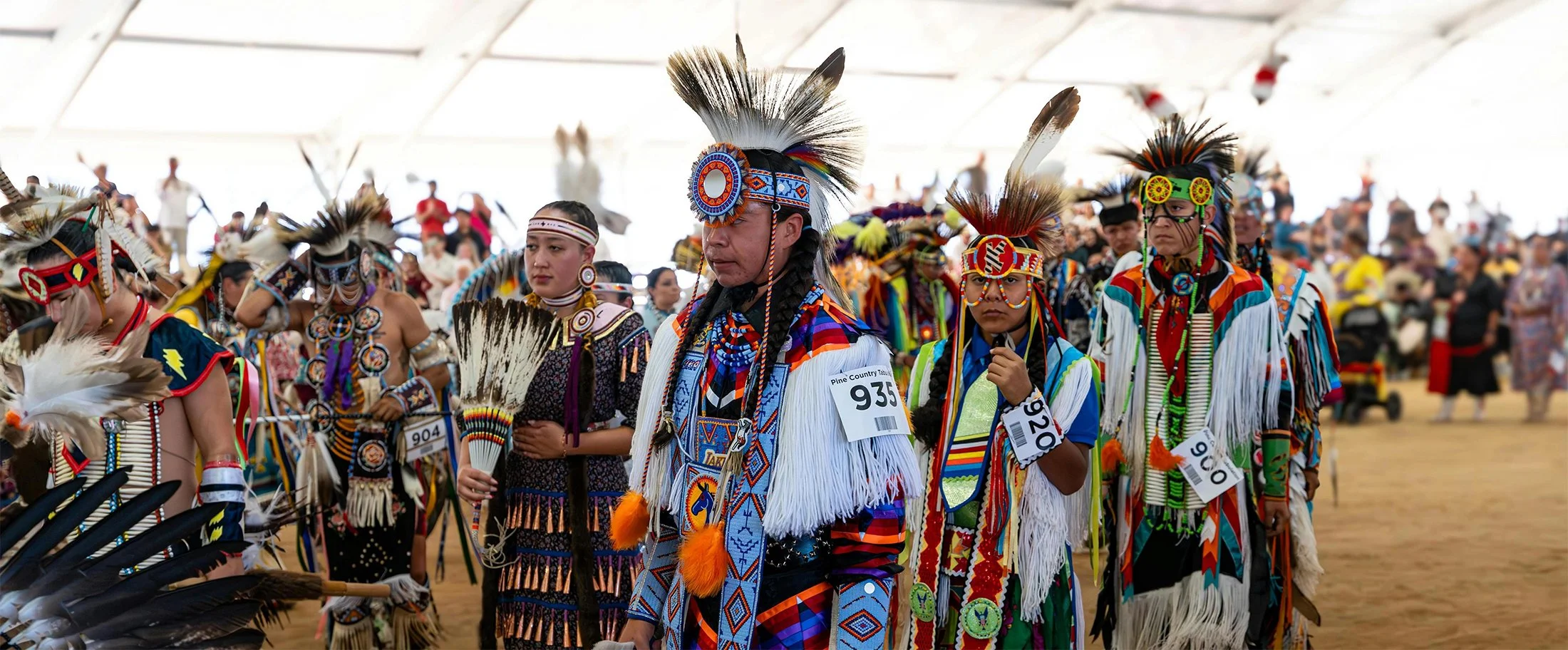
We inherited the benefits of this land. The Lenape inherited the consequences of losing it.
SUPPORT LENAPE NATIONS, TRIBAL CITIZENS & COMMUNITIES TODAY.
If you live in Lenapehoking, grew up here, work here, vacation here, own a home, operate a business, or enjoy the Jersey Shore, Central Park, the Pocono Mountains, or the rivers and forests of the Northeast, this page is for you.
We have built our homes, businesses, and communities upon land that was home to the Lenape people for thousands of years. We enjoy its beauty, benefit from its resources, and call it our own.
Let's give something back.
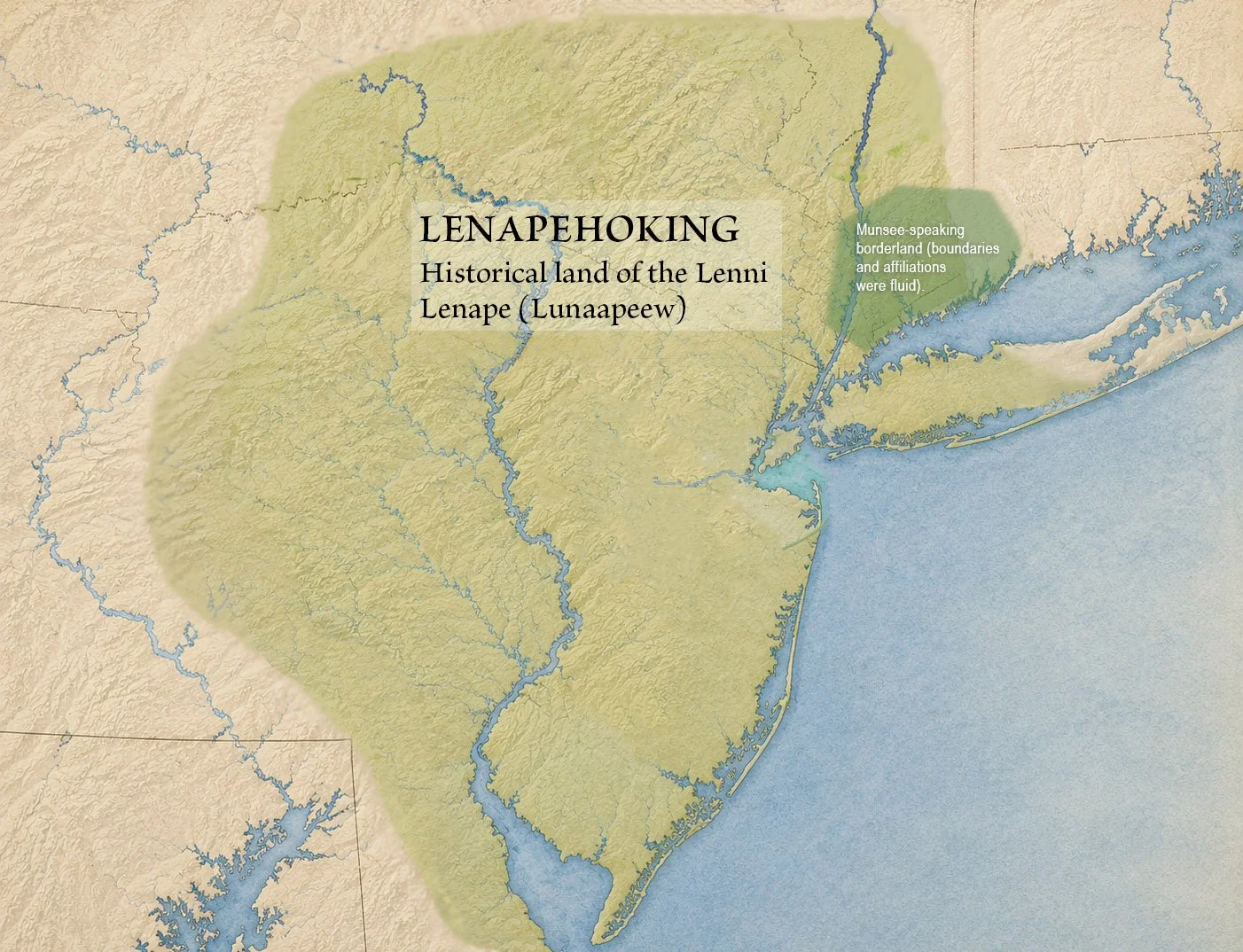
Today, many Lenape descendants live in Oklahoma, Wisconsin, and Ontario, far from the rivers and valleys their ancestors once called home. Despite centuries of displacement and dispossession, the six Lenape nations continue to preserve their languages, strengthen their communities, protect their heritage, and create opportunities for future generations.
Acknowledging that history is important. Doing something about it is even more important.
If you own a business, consider hiring qualified Lenape citizens for remote positions. If you lead a corporation, explore a meaningful partnership. If your company owns surplus land, consider whether some of it could be returned to Lenape ownership or stewardship. If you work in education, create opportunities for Lenape students. If you belong to a historical society, land trust, or community organization, help establish relationships with the nations whose ancestors lived here.
Or simply make a financial contribution directly to a Lenape nation or one of its programs.
This is not about guilt. It is about gratitude, respect, and responsibility.
It is about recognizing that those of us who benefit from Lenapehoking today have an opportunity to support the descendants of those who called it home long before us.
You do not need wealth, influence, or a grand plan to begin.
We cannot change the past. But we can help shape what happens next.
Support the Six Lenape Nations Directly
The best way to support Lenape people is to connect directly with the nations themselves.
Each of the six Lenape nations has its own leadership, institutions, cultural priorities, and community needs. Some maintain public donation opportunities. Others welcome inquiries about educational programs, cultural preservation, employment, community services, or potential partnerships.
Whether you are an individual wishing to contribute $50 or a corporation considering a substantial commitment, begin by asking what would be useful.
Delaware Tribe of Indians | Bartlesville, Oklahoma
The Delaware Tribe of Indians maintains programs supporting cultural preservation, education, elder services, food assistance, and community development. It provides a public donation opportunity for individuals and organizations wishing to contribute directly.
Official website: https://delawaretribe.org
Donate directly: https://delawaretribe.org/donations/donate/
Delaware Nation | Anadarko, Oklahoma
The Delaware Nation supports cultural preservation, education, historic preservation, and community programs. Its leadership and departments can provide guidance about appropriate opportunities for direct assistance or collaboration.
Official website: https://www.delawarenation-nsn.gov
Stockbridge-Munsee Community | Bowler, Wisconsin
The Stockbridge-Munsee Community maintains programs in education, cultural preservation, language revitalization, healthcare, and community development. Individuals and organizations can contact the nation to inquire about supporting its priorities.
Official website: https://www.mohican.com
Munsee-Delaware Nation | Muncey, Ontario
The Munsee-Delaware Nation provides education, employment and training, cultural programming, wellness services, and community support. Its administration can direct inquiries to the appropriate departments.
Official website: https://munsee.ca
Delaware Nation at Moraviantown | Thamesville, Ontario
Also known as Eelünaapéewi Lahkéewiit, the Delaware Nation at Moraviantown continues to strengthen its community, preserve its cultural heritage, and create opportunities for future generations.
Official website: https://delawarenation.on.ca
Delaware Community at Six Nations of the Grand River | Ontario
The Delaware community at Six Nations maintains its identity within the larger Six Nations of the Grand River community. Those wishing to support specifically Lenape initiatives should seek guidance through appropriate Delaware representatives and Six Nations contacts.
Six Nations website: https://www.sixnations.ca
Please note: RaritanLenape.org does not collect donations or distribute contributions. All support should be arranged directly with the appropriate Lenape nation or authorized organization. Contact recipients before sending goods, organizing fundraisers, or announcing partnerships.
Interested in Supporting Multiple Lenape Nations?
If your company or foundation is considering a substantial contribution benefiting several or all six Lenape nations, the Lenape Center in Manhattan may be a valuable place to begin the conversation.
The Center is a Lenape-led cultural organization working to strengthen the connection between contemporary Lenape people and their ancestral homeland. Its leadership includes respected Lenape cultural figures with relationships across Indigenous communities and institutions in the Northeast.
For a corporation exploring a significant financial contribution, product donation, employment initiative, educational partnership, or potential land contribution, the Center may be able to provide guidance or help identify appropriate contacts.
The Lenape Center does not represent the governments of the six nations, and any coordinated initiative would require the direct participation and agreement of the interested nations. Donations intended for particular nations should be arranged with those nations unless another arrangement has been expressly authorized.
A single corporate commitment could potentially benefit multiple Lenape communities, provided the initiative is developed around their own priorities and with their full participation.
For organizations seeking to explore this possibility, an initial conversation with the Lenape Center could be a useful first step.
Lenape Center: https://lenape.center
The Center's potential role in facilitating multi-nation corporate partnerships is a suggestion, not an established service or commitment. Organizations should confirm its interest and capacity before relying on it as a point of coordination.
Give More Than Money
Some of the most meaningful contributions are not financial gifts. They are jobs, resources, expertise, opportunities, and relationships that can make a difference for years to come.
Businesses throughout Lenapehoking have capabilities that could be valuable to the six nations. The opportunity begins with considering what your company can offer and asking whether it aligns with a nation's needs.
If You Have a Connection to Government, You Could Help Open an Extraordinary Door
Imagine a New Jersey town, a Pennsylvania county, or a New York state agency establishing a lasting relationship with the descendants of the Lenape people whose ancestors once lived on the very land it governs.
Throughout Lenapehoking, local, county, and state governments oversee thousands of acres of public land, historic properties, parks, forests, waterways, and preserved open spaces. They also shape public education, economic development, historic preservation, and community life.
What if some of these public resources and opportunities could help reconnect Lenape nations with their ancestral homeland?
If you are an elected official, government employee, commissioner, planning board member, political appointee, or simply someone with relationships in government, you may be in a position to help begin a conversation with lasting consequences.
A Partnership With Benefits for Everyone
For Lenape nations, government partnerships could create opportunities for ancestral land access, cultural gatherings, historical research, educational programs, environmental stewardship, and stronger connections to places their ancestors once called home.
For participating governments, these relationships could bring valuable historical knowledge, richer public education, more inclusive historic preservation, stronger conservation partnerships, and meaningful connections with living Indigenous nations.
A government that builds a genuine relationship with Lenape descendants is not simply acknowledging history. It is helping create a better future.
Could Public Land Be Part of That Future?
Consider the possibilities.
A municipality might provide access to a historic property for Lenape educational programs or cultural gatherings. A county could invite Lenape participation in the stewardship of a preserved forest, river corridor, or park. A state might explore agreements allowing cultural access, ecological restoration, or shared stewardship of historically significant land.
And in appropriate circumstances, governments could investigate whether suitable surplus property might be transferred or donated to an interested Lenape nation.
Imagine a preserved landscape in the Raritan Valley where Lenape descendants could gather, teach their children, share their history, and reconnect with the land of their ancestors.
Such arrangements would depend on applicable laws, public obligations, existing conservation restrictions, and the wishes of the participating nations. Not every property would be suitable, and shared stewardship is not the same as transferring ownership.
But the possibilities deserve serious consideration.
Opportunities Beyond Land
Government relationships could also create lasting benefits through:
Historic preservation: Involving Lenape representatives in identifying, interpreting, and protecting ancestral sites, burial places, and culturally significant landscapes.
Education: Supporting Lenape-led school programs, public lectures, museum exhibitions, and educational exchanges.
Economic opportunity: Sharing government contracting opportunities, professional training, internships, and other programs for which Lenape citizens or businesses may be eligible.
Cultural reconnection: Supporting visits by Lenape youth, elders, educators, and families to ancestral places throughout Lenapehoking.
Environmental stewardship: Collaborating on river restoration, habitat protection, native plant initiatives, and conservation projects.
Public recognition: Working with Lenape nations on accurate historical markers, place names, public exhibits, and commemorations that recognize both the past and the continued existence of Lenape people today.
These need not begin as expensive initiatives. A meeting between a mayor, county executive, state official, and interested Lenape leaders could be the first step toward a relationship that grows over many years.
From Recognition to Relationships
The most meaningful government partnership would not end with a proclamation, a ceremony, or a land acknowledgment.
It would create an ongoing relationship in which Lenape nations have opportunities to participate in decisions, develop projects, and benefit from connections to their ancestral homeland.
Any initiative should begin with direct outreach to the appropriate nations, respect their independent leadership, and provide compensation when their representatives contribute professional or cultural expertise.
For elected officials and government leaders, such partnerships offer the possibility of leaving a legacy that extends far beyond a term in office.
For Lenape nations, they could help reopen doors to a homeland from which generations of their ancestors were displaced.
If you have a connection to government, use it to start a conversation. A single introduction could lead to a partnership that changes what is possible for generations to come.
If Your Business Hires Remote Workers
Your company may be located in Lenapehoking, but your next employee does not have to be.
Businesses throughout New Jersey, New York, Pennsylvania, and Delaware can explore recruiting qualified Lenape citizens for remote positions in accounting, customer service, technology, marketing, administration, design, consulting, and other professional fields.
Contact a nation's employment or workforce development office and ask whether it can share job opportunities with interested citizens.
Consider paid internships, apprenticeships, and mentoring programs for Lenape students and young professionals.
Employment opportunities should be based on qualifications, fair compensation, and applicable hiring requirements. Employers recruiting residents of Ontario should also consider cross-border employment and payroll obligations.
A job can provide far more than a paycheck. It can create independence, professional growth, and opportunities that last for years.
If You Own a Farm, Grocery Store, or Food Company
Could your business help support food assistance, community gardens, school nutrition programs, or elder services within a Lenape nation?
A farm might sponsor fresh produce. A grocery company could provide financial support for food purchases. A distributor might help reduce the cost of supplying a community program.
Lenapehoking is home to major food businesses, including Wakefern Food Corp., The Campbell's Company, Goya Foods, and B&G Foods. Imagine what even one sustained partnership could accomplish.
Because the nations are located far from much of the northeastern United States, funding local food purchases may be more practical than shipping perishable products.
Whether you operate a neighborhood grocery store or a national food company, begin by asking what assistance would be welcome.
If You Provide Professional Services
Consider what your organization does best.
A technology company might provide training. An accounting firm could support financial education. A construction company might contribute materials or expertise. A marketing agency could help with a nation-requested communications project.
Attorneys, engineers, architects, healthcare professionals, designers, consultants, and other specialists may have valuable skills to share.
The goal is not to arrive with a solution looking for a problem. It is to offer your capabilities and allow the nation to decide whether there is a useful match.
A Partnership That Means More
Imagine the significance of a major corporation such as Wakefern, Campbell's, Johnson & Johnson, Merck, or Unilever establishing a public partnership with the descendants of the people whose ancestral homeland helped make its success possible.
These companies, along with hundreds of others operating throughout Lenapehoking, have an opportunity to connect their corporate citizenship efforts with the history of the land on which they operate.
For Lenape nations, meaningful partnerships could provide employment, educational support, cultural preservation funding, essential resources, and renewed connections to their ancestral homeland.
For participating companies, such relationships could strengthen community ties, inspire employees, demonstrate responsible corporate leadership, and create a distinctive philanthropic commitment.
There is a powerful story to be told when a company that has prospered in Lenapehoking chooses to invest in the future of its original peoples.
A multi-year partnership could support scholarships, language programs, workforce development, cultural initiatives, or other priorities established by the participating nations.
Any public recognition should be developed with the nation's consent, with tribal leadership guiding how its name, history, and participation are represented.
This is more than an opportunity to give back. It is an opportunity to build something meaningful together.
What About the Land Your Company Owns?
Major corporations throughout Lenapehoking own or control substantial real estate, including office campuses, research centers, manufacturing facilities, warehouses, and undeveloped property. What if even a small portion of that land could help reconnect Lenape people with their ancestral homeland?
Companies such as Johnson & Johnson, Merck, Campbell's, Wakefern, and Unilever could consider reviewing their real estate portfolios for surplus or underutilized property that might be suitable for donation, transfer, conservation, or long-term cultural access agreements with interested Lenape nations.
Imagine a parcel of ancestral land returned to Lenape ownership or stewardship.
It might become a place for cultural gatherings, education, ecological restoration, or opportunities for descendants to reconnect with the landscapes of their ancestors.
Such a gesture could carry significance far beyond the acreage involved.
For a corporation, it could represent an extraordinary commitment to historical responsibility and a lasting relationship with Lenape people. For a Lenape nation, it could provide something no ordinary financial contribution can fully replace: a renewed physical connection to ancestral land.
Land transfers and stewardship agreements would require careful consideration of ownership, environmental conditions, legal obligations, financial costs, and long-term responsibilities. Above all, they would need to reflect the wishes and priorities of the interested nations.
A financial contribution can support a program. A land contribution could help reconnect generations.
Become an Advocate in Lenapehoking
You may not be able to change history. But you can influence how your community recognizes it, teaches it, and builds relationships with the people whose homeland it occupies.
Think about the institutions that shape life around you.
Town governments. Historical societies. Schools. Libraries. Museums. Universities. Land trusts. Conservation organizations. Businesses and charitable foundations.
How many have meaningful relationships with the present-day Lenape nations?
You can help begin those conversations.
Start With Your Town or County
Encourage local officials to establish relationships with appropriate Lenape nations and invite their participation in historical interpretation, commemorations, and discussions involving culturally significant places.
A town might collaborate with tribal representatives on a historical marker, public program, or educational initiative.
Participation should be voluntary, appropriately compensated, and guided by the nation's interests.
Reach Out to Historical Societies and Museums
Many institutions throughout Lenapehoking preserve Indigenous objects and tell stories about the region's earliest inhabitants.
Encourage them to work directly with Lenape cultural representatives and historians.
Ask whether their exhibits accurately represent the six living Lenape nations, rather than treating Lenape history as something that ended centuries ago.
Where ancestral remains or cultural objects are involved, encourage respectful consultation and compliance with applicable repatriation requirements.
History becomes more complete when descendants have a meaningful voice in how it is told.
Connect With Land Trusts and Conservation Organizations
Across Lenapehoking, conservation organizations protect forests, rivers, wetlands, and open spaces that may hold deep ancestral significance.
Encourage them to explore relationships with Lenape nations involving cultural interpretation, ancestral access, ecological stewardship, and protection of significant places.
Some organizations may be able to consider land transfers, conservation partnerships, or long-term cultural access agreements.
Protecting the land and honoring its Indigenous history should be part of the same conversation.
Encourage Schools and Universities to Build Relationships
Schools throughout Lenapehoking teach American and local history, yet many students learn little about the Lenape people whose ancestors inhabited the places where they live.
Encourage schools to invite Lenape educators, compensate them fairly, and incorporate Indigenous-authored materials into their programs.
Universities can explore scholarships, paid internships, collaborative research, cultural exchanges, and professional opportunities for Lenape students.
The Lenape should not appear in education only as people of the distant past. Their contemporary voices belong in the classroom.
Help Reconnect Lenape People With Their Ancestral Homeland
Make the Journey Home Possible
Imagine a young Lenape student from Oklahoma standing beside the Raritan River for the first time.
Or an elder from Wisconsin walking through a landscape known to generations of ancestors.
For many Lenape descendants, returning to Lenapehoking requires significant travel expenses, accommodations, transportation, and time away from work or family.
What if businesses, foundations, universities, or individuals within Lenapehoking helped make those journeys possible?
An Ancestral Homeland Visit Fund could support nation-organized educational visits, youth experiences, cultural exchanges, and opportunities for elders and families to reconnect with ancestral places.
This is a proposed opportunity, not an existing fundraising program administered by RaritanLenape.org. It would need to be developed directly with interested Lenape nations, which would determine its purpose, participants, and activities.
A meaningful connection to ancestral land should not depend entirely on someone's ability to afford the journey.
Help Keep Lenape Languages Alive
Language carries identity, memory, cultural knowledge, and relationships across generations.
Lenape nations continue working to preserve and revitalize their languages through educational programs, recordings, teaching materials, and community learning.
Individuals, businesses, and foundations can inquire about supporting nation-directed language initiatives and cultural preservation programs.
Supporting a language is an investment in generations who have yet to be born.
Create Scholarships and Career Opportunities
A company might establish an educational scholarship in partnership with a Lenape nation. A university could offer paid research opportunities. A professional association might help develop mentoring relationships.
Such initiatives can create lasting connections between Lenape citizens and the educational and economic institutions now operating within their ancestral homeland.
Support Lenape Artists, Writers, and Businesses
Purchase authentic artwork, books, music, and products directly from Lenape creators.
Commission artists, invite cultural educators to participate in public programs, and compensate them fairly for their work and expertise.
The Lenape are not simply a people to be remembered. They are artists, entrepreneurs, educators, professionals, and leaders shaping the world today.
The Lenape Center: A Living Connection Within Lenapehoking
The Lenape Center, based in Manhattan, offers another meaningful way to support contemporary Lenape culture within the ancestral homeland.
Its leadership includes prominent Lenape cultural figures such as Joe Baker, an enrolled citizen of the Delaware Tribe of Indians, and Curtis Zunigha, a former chief of the Delaware Tribe.
Through arts, education, cultural programming, and public engagement, the Center works to strengthen awareness of Lenape history and living cultural traditions.
For individuals, businesses, museums, universities, and foundations in the New York metropolitan area, it offers opportunities to support Lenape-led cultural initiatives and explore meaningful partnerships.
The Lenape Center is an independent cultural organization, not the government of any of the six nations. It provides an additional avenue for engagement, particularly for organizations interested in strengthening Lenape cultural connections within Lenapehoking.
Website: https://lenape.center
One Person - You - Can Open a Door
Perhaps you work for a company that could hire a remote employee.
Perhaps you know someone at a university who could establish a scholarship.
Perhaps you serve on a historical society board, volunteer with a land trust, or know a local elected official.
Perhaps your company owns land it no longer needs.
Perhaps you have a professional skill, a business connection, or simply the willingness to ask a question.
You may already have the ability to make a difference without realizing it.
Begin with one conversation.
Ask your employer whether it has considered recruiting qualified Lenape citizens. Encourage your local museum to establish a relationship with tribal cultural representatives. Suggest that your school invite a Lenape educator. Contact a nation directly to ask whether there is a program you can support.
You do not need to speak for the Lenape.
You can help open doors so that Lenape people have more opportunities to participate, lead, and benefit from relationships with the institutions that now occupy their ancestral homeland.
The Next Chapter Is Ours to Help Write
For centuries, the story of Lenapehoking has been told largely through the arrival of newcomers, the growth of towns, and the building of a nation. Too often, the descendants of the people who first called this land home have been left outside that story.
We cannot undo the displacement of the Lenape. We cannot erase the hardships endured or restore the generations that were lost.
But we can help ensure that distance does not become disconnection, and that remembrance leads to something more meaningful than words.
A donation. A job opportunity. A scholarship. A corporate partnership. A return visit to ancestral land. A museum willing to listen. A company willing to return a piece of land.
No single gesture can repair centuries of loss. But meaningful relationships can begin with small actions and grow into something lasting.
We have inherited much from Lenapehoking. Perhaps one of the most meaningful things we can do is help strengthen the connection between this land and the people who have never stopped calling it home.
The time to begin is now.
RaritanLenape.org is an independent educational project and is not affiliated with or authorized to represent any Lenape nation. We do not collect donations, coordinate contributions, or arrange partnerships on behalf of the nations. All offers of support should be directed to the appropriate nation or Lenape-led organization. Our purpose is to encourage awareness, inspire action, and help individuals and organizations establish direct, respectful connections.