RaritanLenape.org > Lenape People / Stories > Lenape History, Town by Town > Flemington & Readington
Flemington & Readington
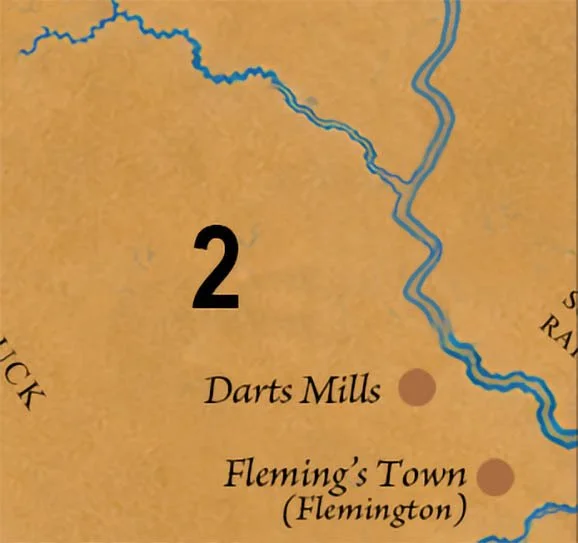
Flemington, Raritan Township, Readington, Three Bridges, Stanton, Flemington Junction, Darts Mills, Copper Hill, Pleasant Run.
Flemington & Readington: Where Lenape History Still Lives
Hidden among the streets of Flemington is the grave of a Lenape chief who died nearly three centuries ago. His name was Tuccamirgan. His story survives through an extraordinary friendship, a centuries-old pipe, and a small burial ground surrounded by modern homes.
Yet his grave is only one chapter in a history stretching back thousands of years, when Indigenous people lived, hunted, fished, and raised families throughout the Raritan River valleys.
Tuccamirgan: A Lenape Chief Remembered
In the 1730s, German immigrant Johan Philip Kaes, later known as John Philip Case, established a farm near Flemington, associated with today's Case-Dvoor Farmstead.
According to local tradition, Tuccamirgan helped Case establish his homestead, beginning a friendship so close that the chief reportedly called him his blue brother. They shared a ceremonial pipe, whose bowl was preserved by the Case family and donated to the Hunterdon County Historical Society in the 1920s.
Although much of their story comes from later family traditions, the surviving pipe provides a remarkable connection to their friendship.
A Lenape Grave in Flemington
When Tuccamirgan died in 1750, tradition holds that he was buried near Case. Later accounts describe the chief being buried seated, facing east, accompanied by personal possessions and weapons, although these details remain unverified.
Case was buried nearby several years later. In 1925, residents restored the cemetery and erected a monument honoring Tuccamirgan.
His grave survives between 56 and 60 Bonnell Street, surrounded by modern homes, an extraordinary reminder of the Lenape presence in eighteenth-century Flemington.
Thousands of Years Along the Raritan
Indigenous people inhabited the wider New Jersey region for more than 10,000 years before Europeans arrived.
The South Branch of the Raritan River provided fish, freshwater, fertile soils, and travel routes. Surrounding forests supplied game, plants, timber, and stone for tools. Over generations, Indigenous communities developed pottery, agriculture, and sophisticated technologies.
By European contact, Flemington and Readington were part of the wider Lenape homeland, connected by families, trade, trails, and waterways.
Three Bridges: Objects Along the River
Near Three Bridges, a carefully worked brown-flint blade was discovered and is documented in a Cumberland County educational collection. Although its precise age remains uncertain, it demonstrates the skill of Indigenous stoneworkers.
Projectile points, scrapers, axes, and pottery found across the surrounding region offer further evidence of generations of hunting, fishing, and daily life.
The South Branch was more than a source of water. It was a corridor connecting people for thousands of years before colonial roads appeared.
Readington: Names and Evidence from an Ancient Landscape
Readington's Lenape history survives in something remarkable: the names of two Indigenous people recorded more than 300 years ago. In 1709, Metamisco and Wataminian were named in a deed transferring approximately 18,000 acres to colonial proprietor George Willocks. The purchase encompassed land between Holland Brook, Cushetunk Mountain, and the Pottersville area.
Holland Brook itself carried an Indigenous name, Amanmechunk, preserved in early colonial records. The people living around Readington's streams and fertile valleys hunted, cultivated crops, and traveled through a network of waterways and trails. Historical accounts also describe seasonal journeys to the coast for fish and shellfish, connecting inland communities with the resources of the Atlantic.
Readington was also crossed by important Indigenous travel routes. The Raritan Indian Path passed through Potterstown, while another established path crossed the Whitehouse area. These routes were later incorporated into colonial roads, helping determine where taverns, mills, and settlements developed. What became important European travel corridors had Indigenous origins.
Archaeological surveys provide another connection to this earlier world. Around Rockaway Creek and Whitehouse, early investigators documented Indigenous campsites, stoneworking areas, and sources of flint and jasper. Finds included projectile points, cutting tools, and a finely crafted bannerstone, evidence of the skill and daily activities of people who inhabited the region long before European settlement.
When Readington was formally established in 1730, its history was already thousands of years old. Its roads followed older routes, its farms occupied an Indigenous landscape, and its colonial deeds recorded the names of people whose communities had known this land for generations.
The Great Land Purchase of 1703
In 1703, West Jersey proprietors arranged a purchase of approximately 150,000 acres between the Delaware and Raritan rivers, encompassing much of the future Amwell region, including Flemington.
Colonial records identify Indigenous leaders, including Coponnockons and Hihammoo, in connection with the transaction.
European farms and settlements gradually spread across the region, placing increasing pressure on Lenape communities and their traditional lands.
Tuccamirgan's presence decades later reminds us that the Lenape did not simply disappear when colonial deeds changed hands.
A Landscape That Still Remembers
Today, Flemington's historic buildings and Readington's rural villages represent only the latest chapters of a much longer story.
Tuccamirgan's grave, the preserved pipe, the blade from Three Bridges, and the rivers connecting these places are reminders of generations who came before. Their Lenape descendants continue today in the United States and Canada.
The history of Flemington and Readington began thousands of years before the first colonial deeds. And in one quiet cemetery on Bonnell Street, that older history still has a name: Tuccamirgan.