RaritanLenape.org > Raritan Lenape History / Footprint > The Ferry at Kakaskia Illinois - Crossing the Mississippi
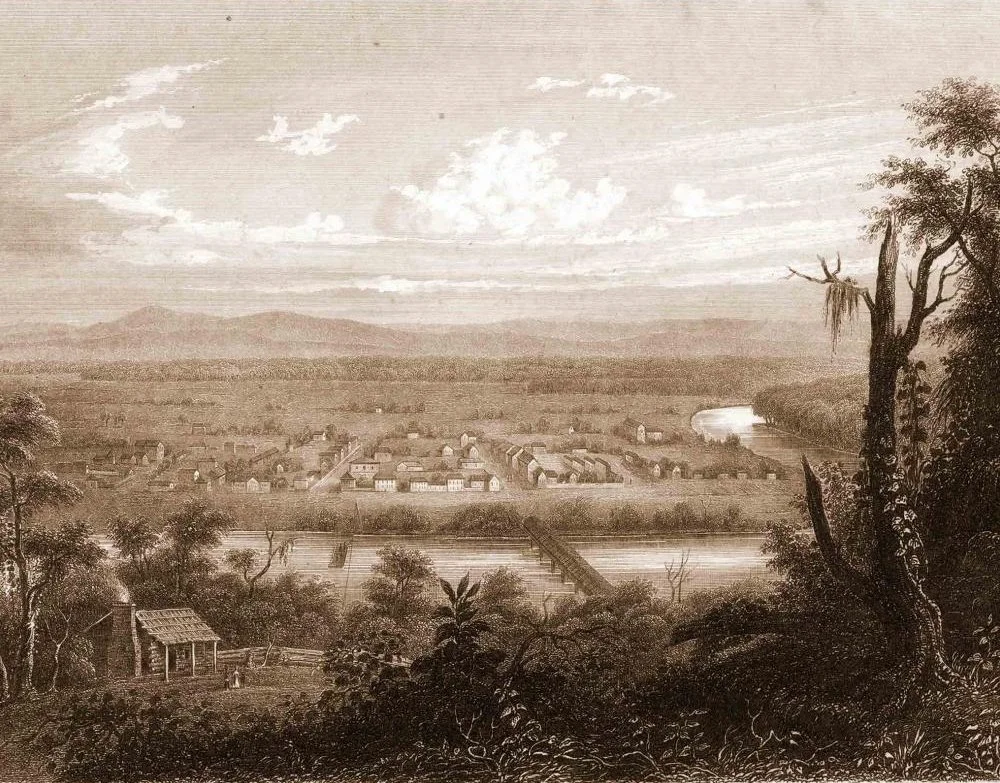
IN 1820, 1,346 LENAPE CROSSED THE MISSISSIPPI - PUSHED EVER WESTWARD, STILL DECADES FROM THEIR FINAL DESTINATION IN INDIAN TERRITORY.
The ferry at Kaskaskia, Illinois 1820 - a journey of displacement, survival, and the determination to remain Lenape.
In 1820, 1,346 Lenape men, women, and children reached the Mississippi River. With them were 1,499 horses, carrying their possessions and what remained of the lives they had been forced to leave behind.
They had come from Indiana. Before that, Ohio. Before that, Pennsylvania. Generations earlier, their culture thrived in Lenapehoking.
Westward. Again and again. Every time they rebuilt their lives, the land beneath them seemed to disappear.
And now, another great river stood in their path.
INDIANA: ANOTHER HOME TAKEN AWAY
The Lenape had established communities along Indiana's White River. They built homes, planted crops, raised livestock, and tried to create a future for their children.
But American settlers wanted the land.
In 1818, the Treaty of St. Mary's forced another devastating choice. The Lenape relinquished their Indiana lands in exchange for promises of a new home west of the Mississippi. They were given three years to leave.
They had moved west to escape displacement. Now they were being displaced because they had moved west.
Once again, families gathered their belongings. Once again, they left behind homes, fields, and the lives they had worked to build.
Their destination was Missouri. Their journey would take them to a ferry at Kaskaskia, Illinois.
THE FERRY AT KASKASKIA
The ferry was small. The gathering on the riverbank was enormous.
It took dozens of crossings over many days to carry the travelers, their horses, and their belongings across the Mississippi.
Amid the confusion, white settlers stole at least thirteen of their horses.
Historian Camilla Townsend and Lenape scholar Nicky Kay Michael recount this remarkable crossing in On the Turtle's Back.
Eventually, the last travelers reached the opposite shore.
More than thirteen hundred Lenape had crossed one of America's greatest rivers. They had been promised a new beginning. Instead, another disaster awaited them.
THE CHILDREN WHO CARRIED THEIR STORIES
Among the travelers was a young boy named Mo-se-ha-kund, meaning "hair of an elk."
He would grow up and pass Lenape stories to his son, Ko-ku-lu-po-we, later known as Charles Elkhair. Those stories would eventually be recorded, preserving memories and traditions carried across generations.
Another family making the journey was connected to Julius Fouts, whose storytelling would also help preserve Lenape traditions.
These children were part of something much larger than a migration. They were witnesses to a people being pushed across a continent.
Their homes could be taken. Their land could be lost. But their language, memories, and stories traveled with them.
MISSOURI: THE PROMISED LAND THAT WASN'T
Missouri was supposed to be the end of their wandering.
Instead came years of hunger, sickness, hardship, and more broken promises. Families who had already endured generations of displacement struggled to survive.
And then came another move.
By the early 1830s, many Lenape had relocated to Kansas. There, they rebuilt communities, cultivated land, and once again tried to establish a lasting home.
But American expansion followed them, tracked them down, and pushed them our once again.
In 1866, another treaty set the stage for the loss of their Kansas lands. By 1867, many had moved into Indian Territory, now Oklahoma.
Lenapehoking. Pennsylvania. Ohio. Indiana. Missouri. Kansas. Indian Territory.
Generations of families. Thousands of miles. Homes established, abandoned, and established again.
The children who crossed the Mississippi in 1820 could scarcely have imagined that nearly half a century would pass before their descendants reached Indian Territory.