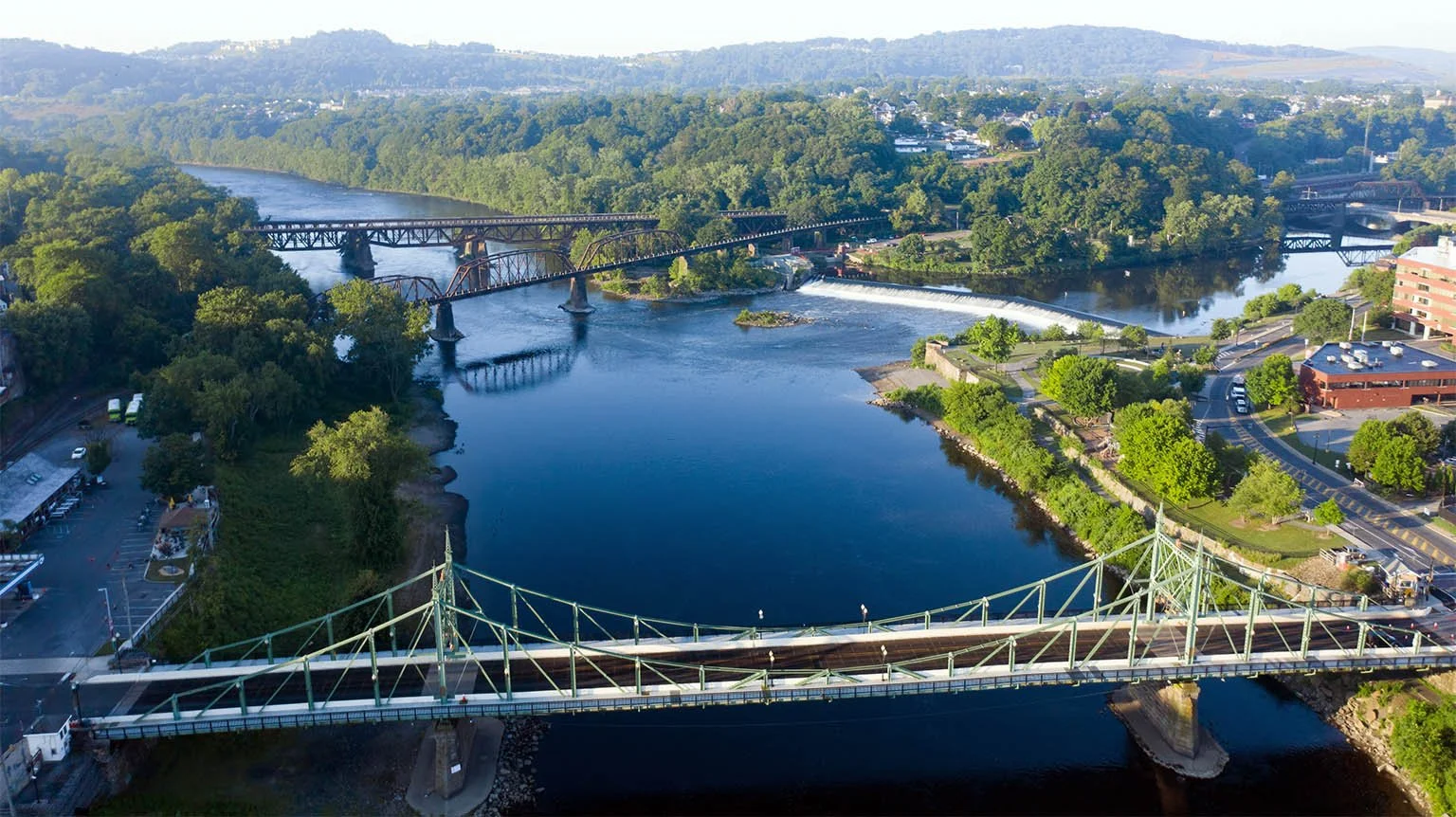
THE TREATY OF EASTON, 1758: THE LENAPE ARE FINALLY PUSHED FROM NEW JERSEY
In 1758, Lenape leaders gathered in Easton, Pennsylvania, seeking peace and protection for their people. Instead, the negotiations would help bring an era of Lenape control over their New Jersey homeland to an end.
For thousands of years, the Lenape had lived along New Jersey's rivers, cultivated its valleys, and maintained communities across the region. But by the middle of the eighteenth century, European settlement had transformed their world. Much of their land had been sold, seized, or claimed through agreements whose fairness and meaning were often disputed.
The Lenape sought peace. New Jersey's colonial government sought to settle the question of Indigenous land ownership once and for all.
A Peace Conference with Enormous Consequences
In October 1758, during the French and Indian War, representatives of numerous Indigenous nations gathered with British colonial officials in Easton, Pennsylvania.
Among those present were Lenape representatives from different communities, including Munsee and Unami speakers, along with leaders of the Haudenosaunee Confederacy and other Native nations. Prominent Lenape diplomat Teedyuscung participated in the negotiations.
The British wanted to end Indigenous support for the French and restore peace along the colonial frontier. Lenape leaders sought security, recognition of their grievances, and protection against further encroachment.
But the negotiations also gave New Jersey officials an opportunity to secure the surrender of remaining Indigenous land claims throughout the colony.
The Raritan River Divides the Land
One of the most remarkable details of the Treaty of Easton is that the Raritan River became a central boundary in the land agreements presented there.
Colonial officials presented two major deeds intended to extinguish Indigenous land claims across New Jersey.
The first, dated September 12, 1758, concerned lands south of a boundary running from the Delaware River near the Water Gap, through the North Branch of the Raritan River, and eastward toward Sandy Hook.
The second, dated October 23, involved Munsee, Wapping, and Pompton representatives and covered remaining claims across northern New Jersey.
Together, the two deeds were presented as transferring the remaining Indigenous land claims in the colony. Governor Francis Bernard declared that New Jersey had secured the necessary agreements.
With these deeds, colonial officials claimed that the Lenape and other Indigenous peoples no longer held ownership claims to the lands of New Jersey.
For the Lenape, the consequences extended far beyond the boundaries drawn on colonial maps. Lands that had supported generations of families were now treated as belonging to the colonial government and its settlers.
Brotherton: An Ancestral Homeland Reduced to 3,000 Acres
In 1758, New Jersey also made arrangements for a reservation for some of the Lenape families who remained in the colony.
Known as Brotherton, the tract encompassed approximately 3,044 acres in present-day Burlington County, near Indian Mills. It was intended as a permanent settlement for Lenape families, particularly those associated with the Cranbury and Crosswicks communities. Missionary John Brainerd played an important role in its development.
A people whose ancestors had occupied lands throughout New Jersey were now being directed toward one small reservation in the Pine Barrens.
Brotherton offered families a place to live, farm, and maintain a community. Yet residents faced economic hardship, declining population, and continuing pressure from surrounding colonial society.
Even this small refuge would prove temporary. By 1801–1802, roughly 43 years after Brotherton was established, most of its remaining Lenape residents had departed for New York to join other Indigenous communities. Many of their descendants would eventually become part of the Stockbridge-Munsee Community in Wisconsin.
In 1822, New Jersey authorized the sale of the former reservation lands. In 1832, the state enacted legislation intended to extinguish remaining collective Delaware claims and rights in New Jersey in exchange for compensation.
After thousands of years in their ancestral homeland, the Lenape were offered just 3,000 acres. Within two generations, even that refuge was gone.
Not every Lenape family moved to Brotherton, and not every Lenape person left New Jersey. But the reservation's brief existence illustrates how quickly the remaining Lenape land base was reduced.
The Treaty That Changed New Jersey Forever
The Treaty of Easton is often remembered as an important peace agreement during the French and Indian War. For New Jersey's Lenape, it carried another meaning.
It marked the culmination of generations of contested purchases, colonial expansion, warfare, and the steady loss of their homeland.
The rivers remained. The forests remained. The names of many places remained. But the people who had known these lands for generations were increasingly pushed away from them.
The Treaty of Easton did not force every Lenape person to leave New Jersey in 1758. Nor did it end their history in the state. Families remained, descendants continued to live in the region, and the connection between Lenape nations and their ancestral homeland endured.
Today, descendants of displaced Lenape communities live in nations and communities in Oklahoma, Wisconsin, and Ontario.
The Lenape did not disappear. They were pushed from much of their homeland, and their history continued far beyond New Jersey's borders.